World trip › Tibet & Mount Everest
China, Tibet (Lhasa, second impressions)
November 2, 2010
Last night was restless too, but already much better than my first night in Lhasa. So my body was slowly adjusting to the new environment.
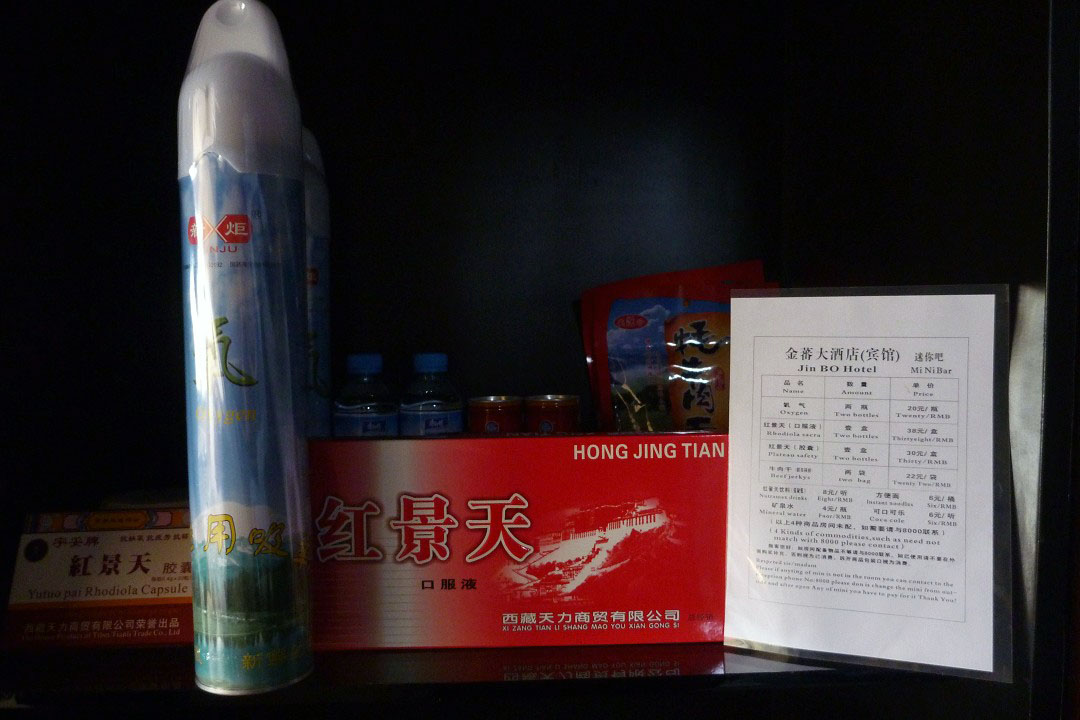
If worst came to worst, the room’s minibar seemed to be well geared up for easing the symptoms of altitude sickness.
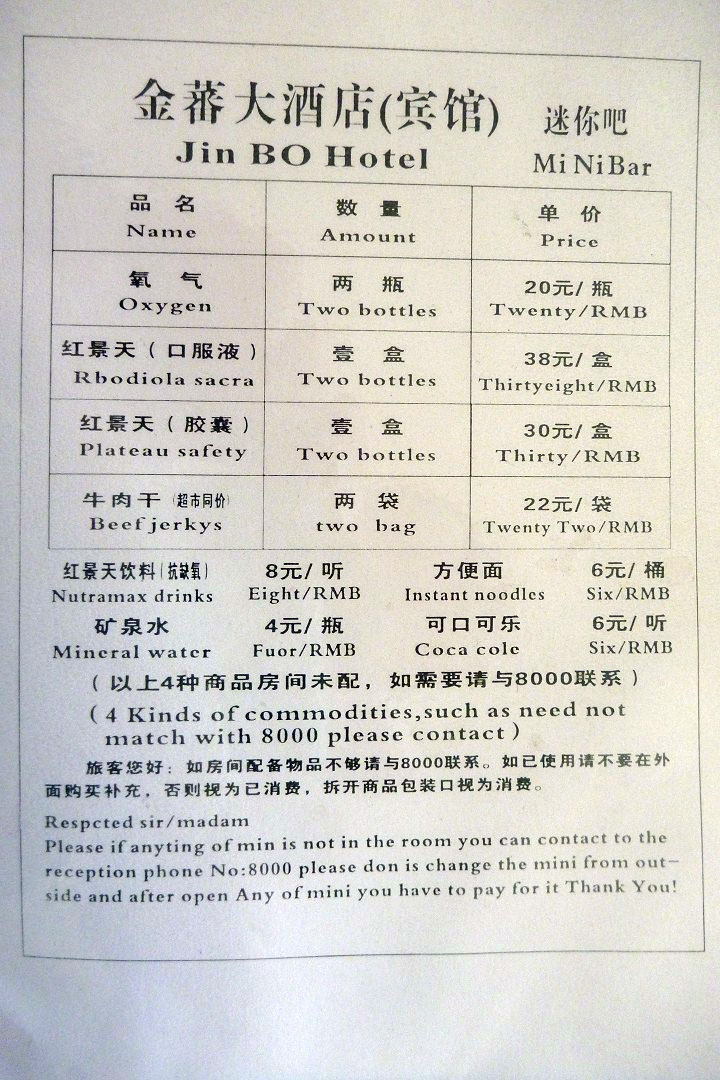
Bottled oxygen or herbal medicine - no problem. ;)
Today we headed off to the…
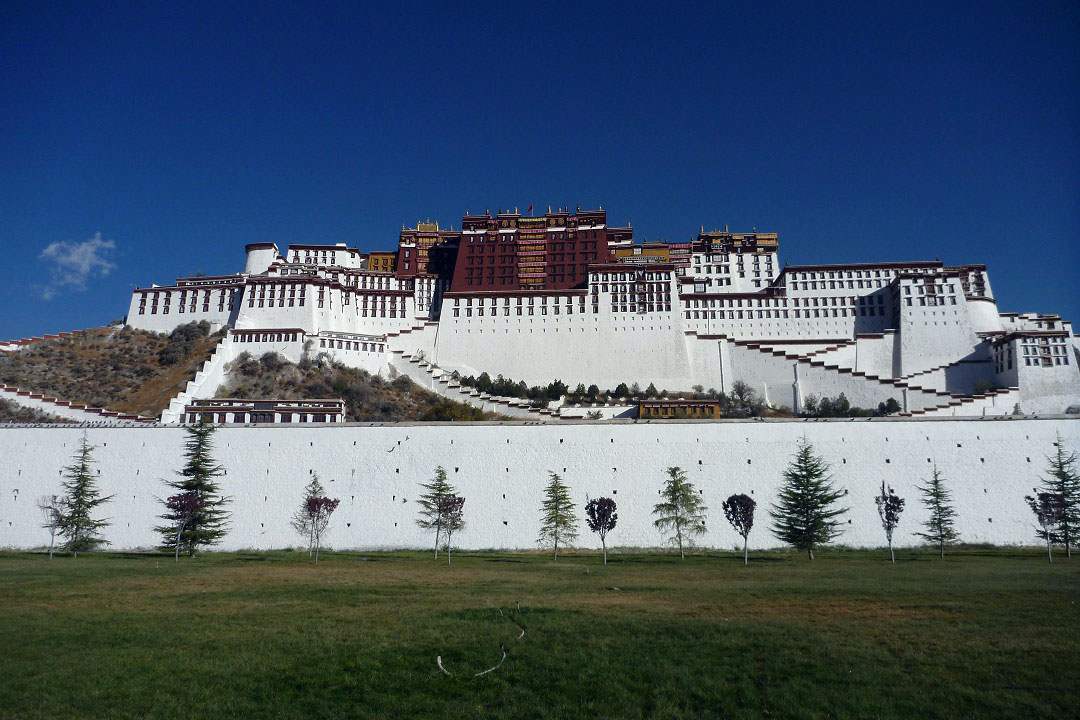
…world-famous Potala Palace - the palace of the Dalai Lamas. All around it, thousands of pilgrims armed with prayer wheels were circling the complex. Walking around the palace three times is a must for any good pilgrim. Walking around the whole of Lhasa three times is for the advanced pilgrim and much more highly recommended. Here, too, it was fascinating to watch the faithful swinging their prayer wheels. But it was also a little bit eerie. As if in a trance and oblivious to their surroundings, they moved along in long lines, murmuring, prayer wheels in hand, completely focused on their prayers. Some covered the distance by measuring it out with their own bodies. That is: stand up, pray towards the sky, lie face down on the ground while praying, get up where your hands were and start all over again. From the train I had already seen people doing this on the roads - pilgrims who spend months covering several hundred kilometers this way to get to Lhasa. Faith in Tibet really runs incredibly deep.
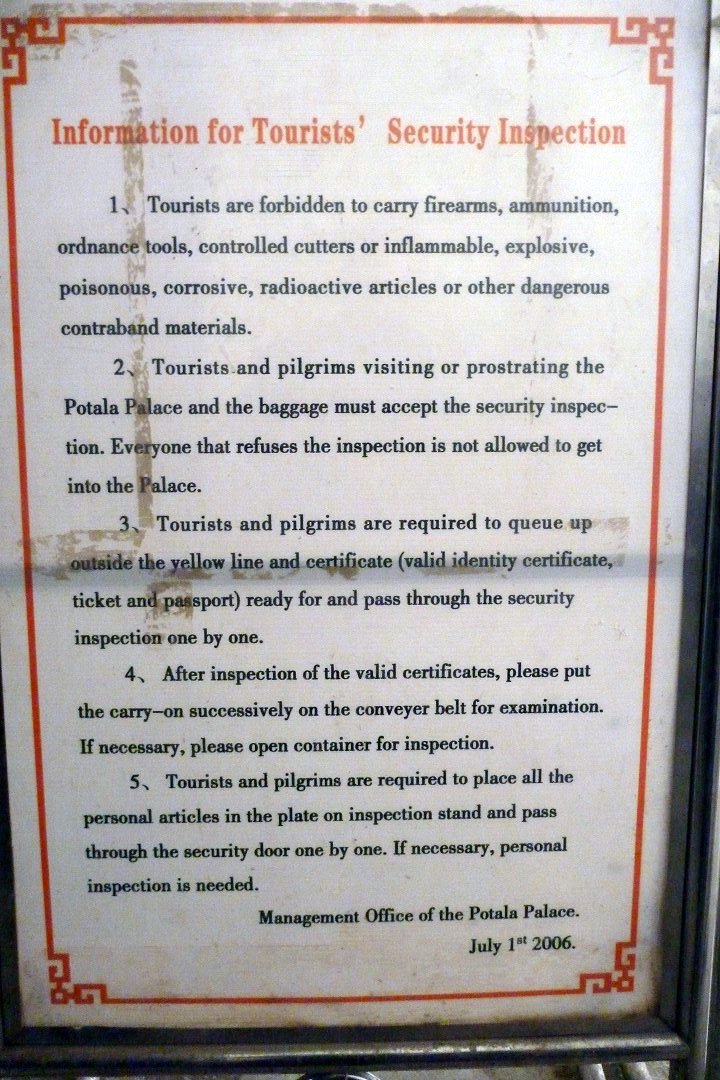
In front of the security gates of the Potala Palace I carefully studied the information sign by the door. Point 1: It is only tourists who are not allowed to bring weapons, radioactive material etc. into the palace. The pilgrims don’t get a mention until point 2. Ergo, pilgrims are not forbidden to take dangerous objects inside…
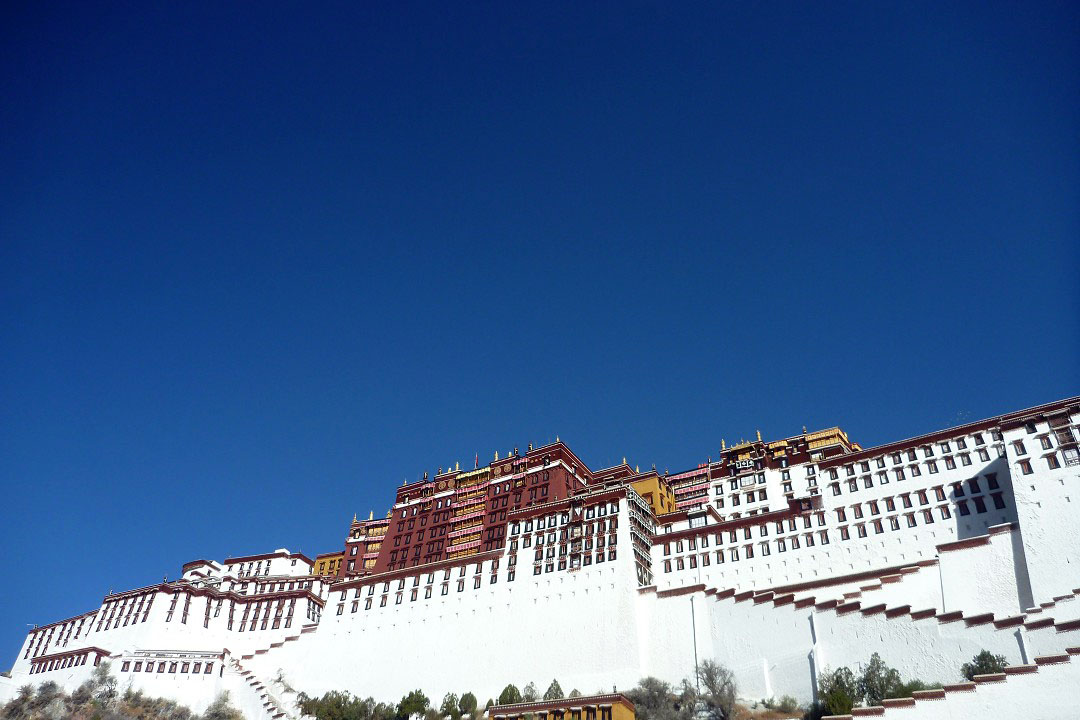
On the grounds themselves, the palace looked even more imposing.
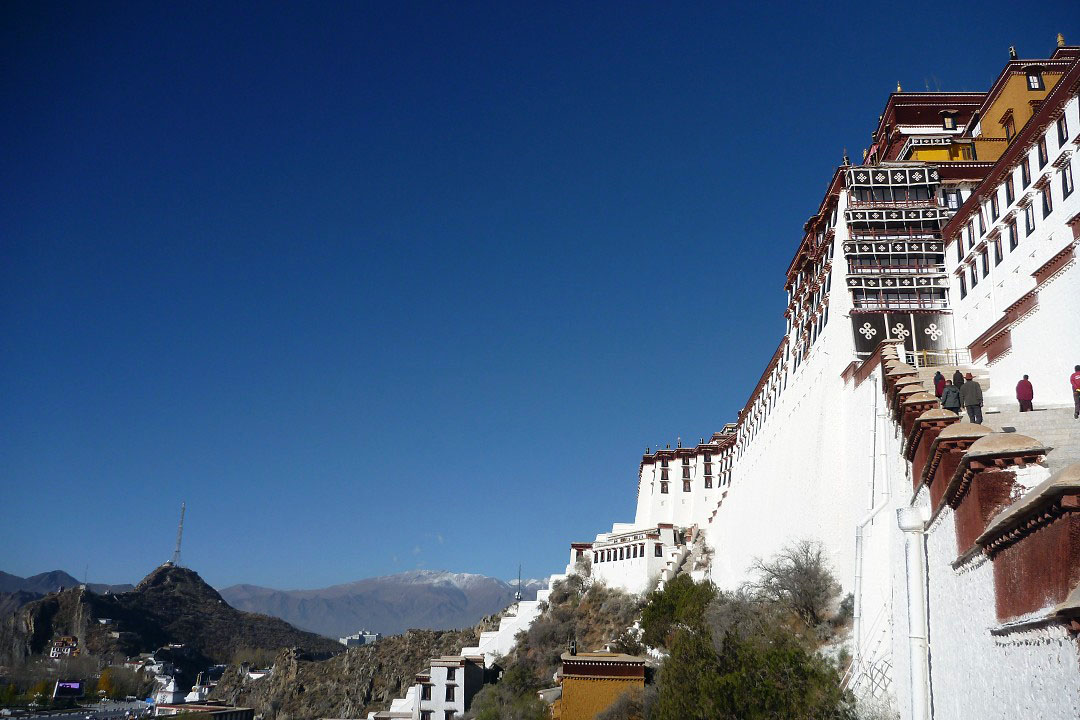
After just a few steps, a stunning view over Lhasa opened up.
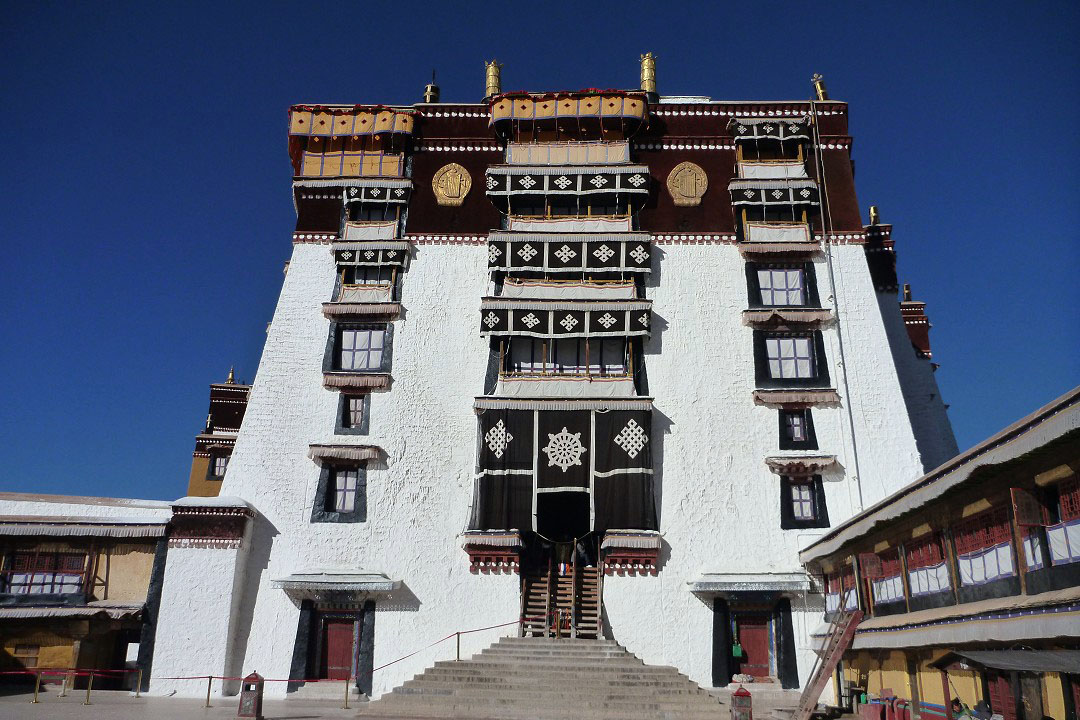
Taking photos inside the palace was forbidden. So here’s the last picture before entering the White Palace…
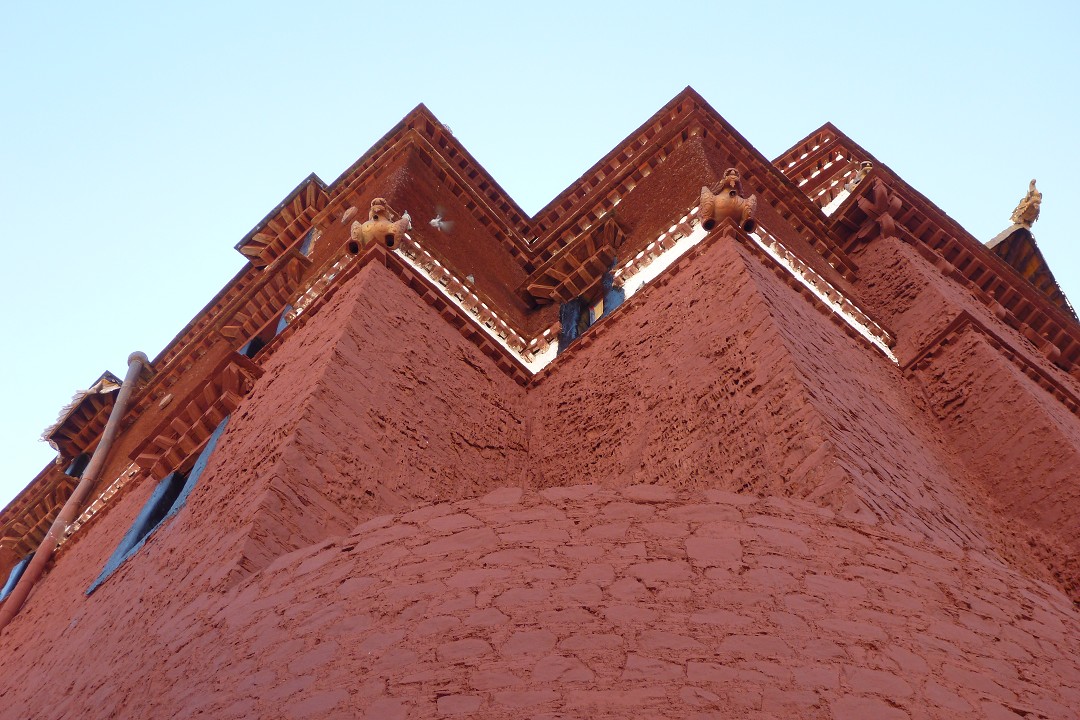
…and here’s the first picture after leaving the Red Palace. Inside there were, once again, countless Buddha statues - some of them of considerable size - as well as prayer candles and prayer flags, small banknotes left by the pilgrims everywhere, ancient scriptures, antique furniture and pictures of past Dalai Lamas.
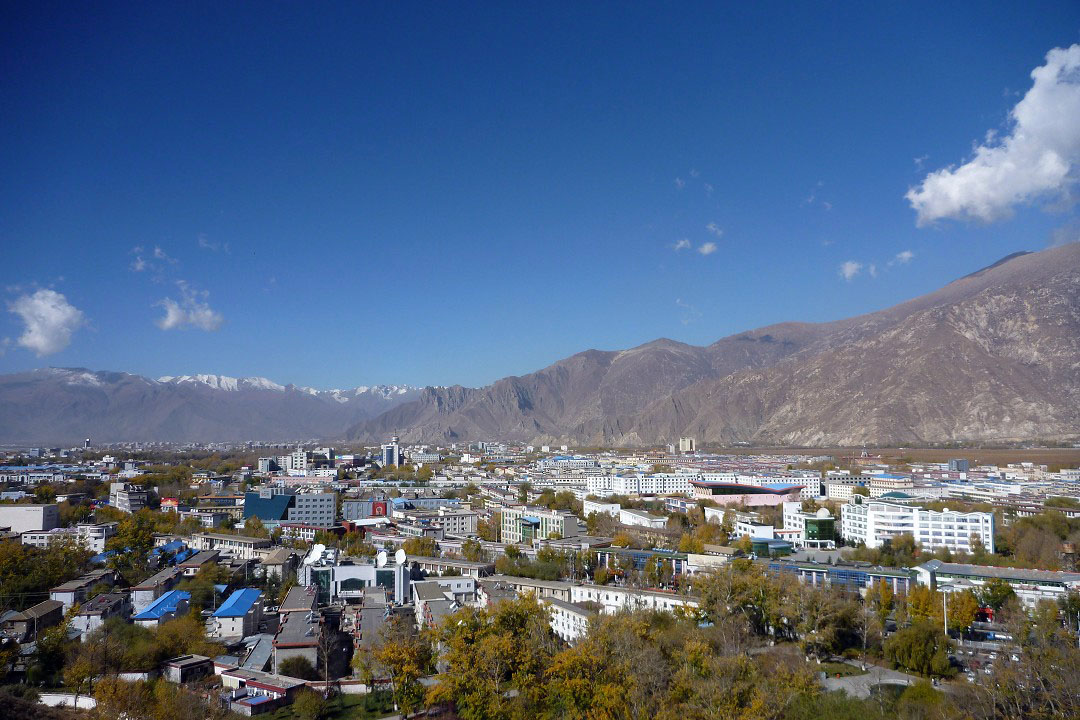
On our way down from the palace grounds we enjoyed the view over Lhasa and eventually made our way back towards our accommodation.
Later, my Tibet travel buddy Michael and I explored the city in search of a warm hat for Mt. Everest Base Camp - we had heard it’s supposed to be a bit chilly up there…
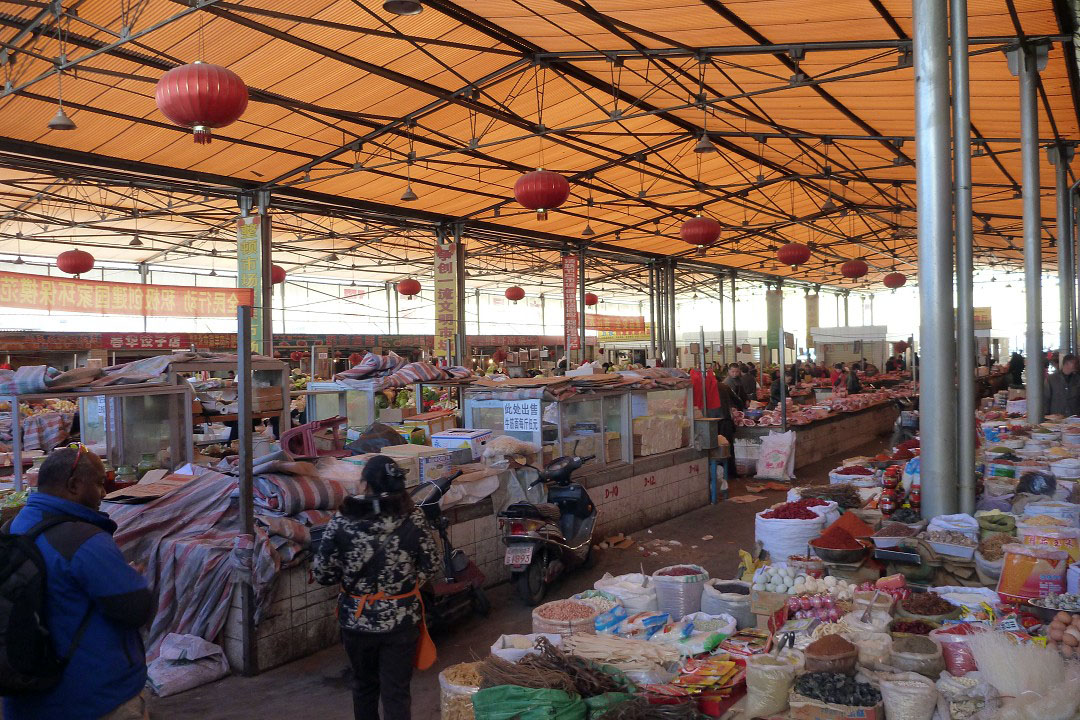
During our search we passed a local market (that’s Michael on the left)…
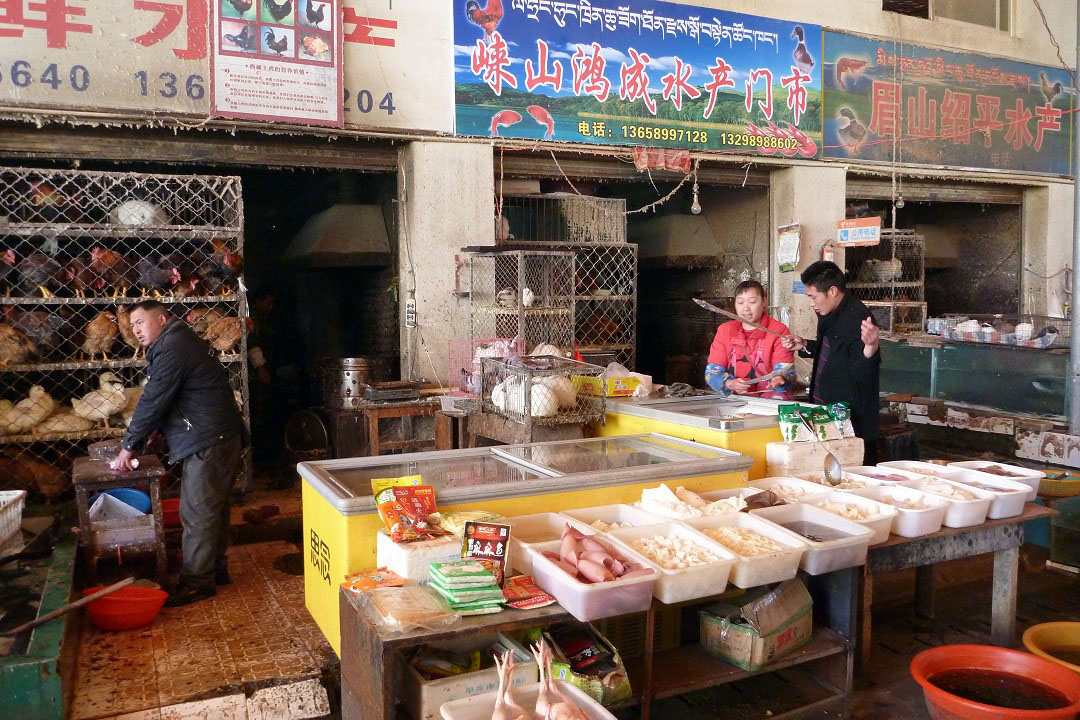
…and marveled at the extraordinary freshness of some of the produce. Later we did find a small stall selling hats. We inspected them, and they looked really warm. Our tour guide had told us about prices of 200 to 300 Yuan, which you could push down to 50 Yuan with some hard haggling. So we mentally prepared ourselves for some tough bargaining. I picked my hat first and asked how much it was.
I (me): How much is this one?
H: (hawker): „Yes thione-fiftyien“
Michael and I looked at each other in total surprise. Did he say 150 or 50? Assuming I had heard 50, and to cut the haggling short, I gave him a 50 Yuan note with a smile. I didn’t want to haggle any lower, since the hat looked really good and the man could certainly use a bit of money. All of a sudden he rummaged around in his wallet and gave me 35 Yuan change. Wow! Apparently the price was just 15 Yuan. My attempts to haggle the price up - I was happy to pay 50 Yuan, since he clearly didn’t want to rip us off - got nowhere. 15 Yuan and not a yuan more, no chance of paying any extra. A haggling experience of a different kind…
Once Michael had also got what he wanted, we carried on through the city with our new hats on our heads, and practically everyone stared at us in amazement. Fair enough - we were a bit of an odd couple, and our looks were definitely totally unusual for Tibet. On top of that, Michael was asked several times whether he was the famous footballer Pelé and whether I might be his manager… ;)
Back in my hotel room I rested a little…
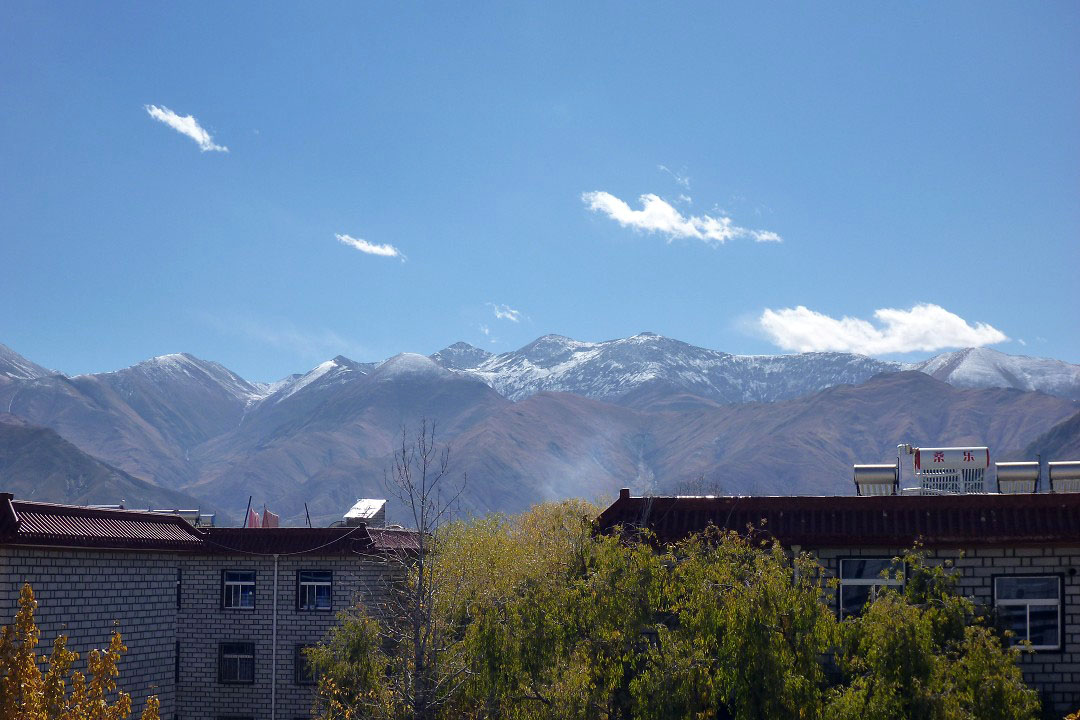
…and enjoyed the view from my room…
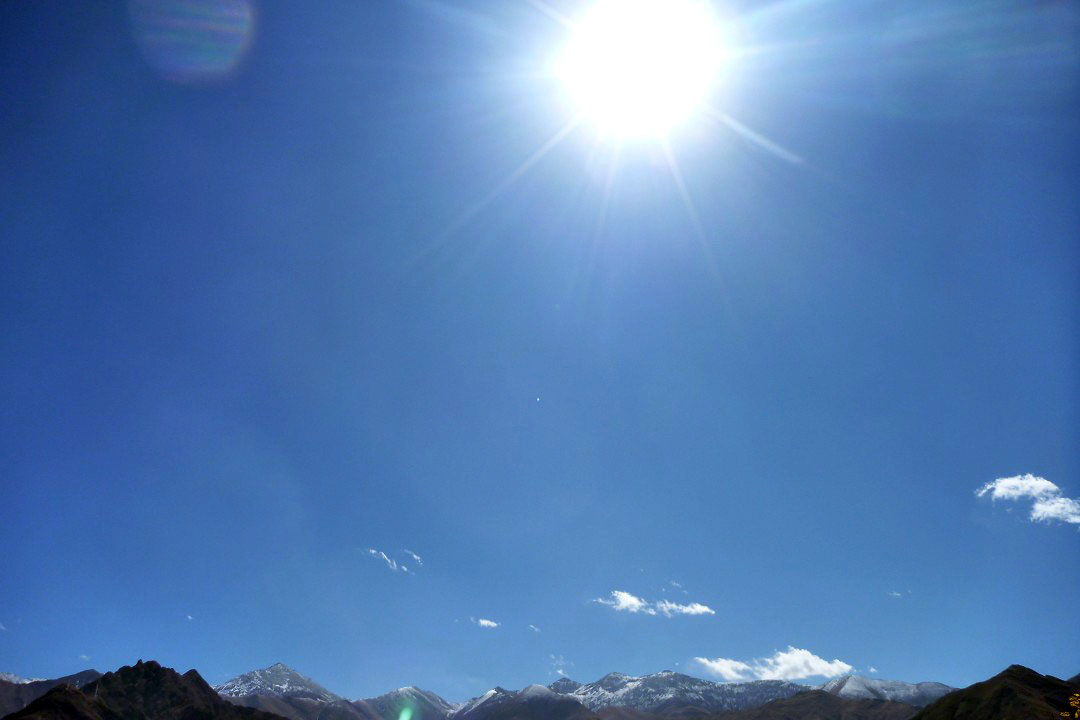
…in the midday sun.
Eventually we set off to visit another monastery,…
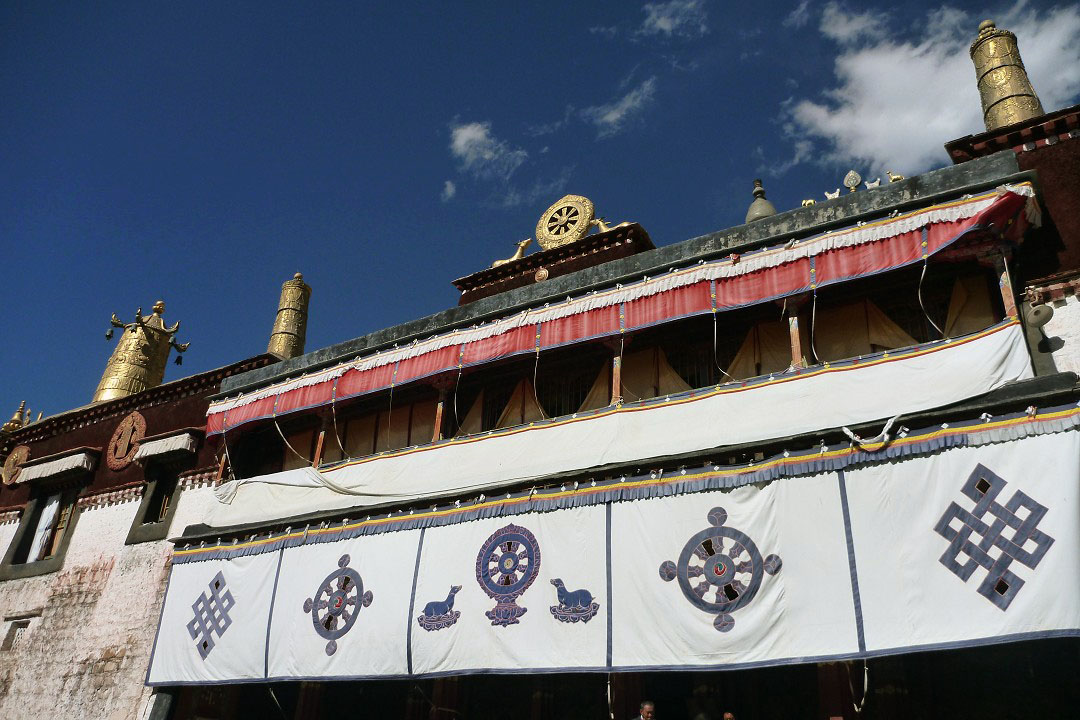
…Sera Monastery. After looking at yet more countless Buddha statues and prayer utensils…
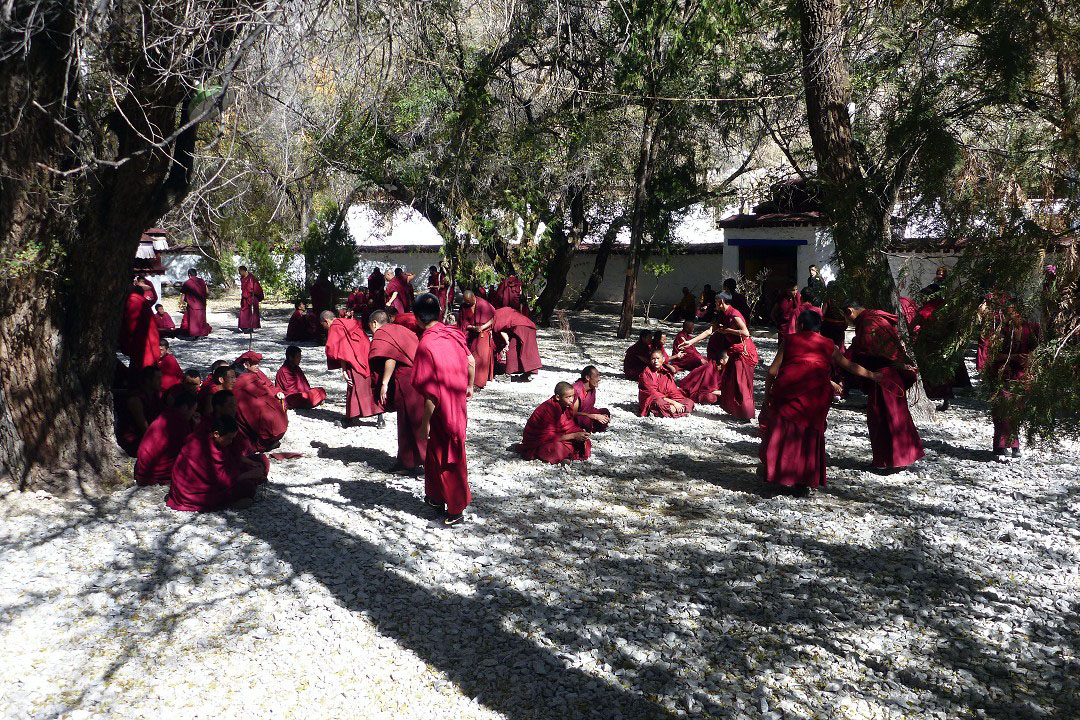
…we were allowed to watch the monks‘ practice rituals in the courtyard of the monastery. Some of the monks sit on the ground in small groups, while one monk stands, formulates a question and fires it at one of the seated monks, loudly clapping his hands. The seated monk is of course supposed to know the answer. If he doesn’t, the whole group debates it, so that everyone learns something. The one and only topic, naturally, is Buddhism.
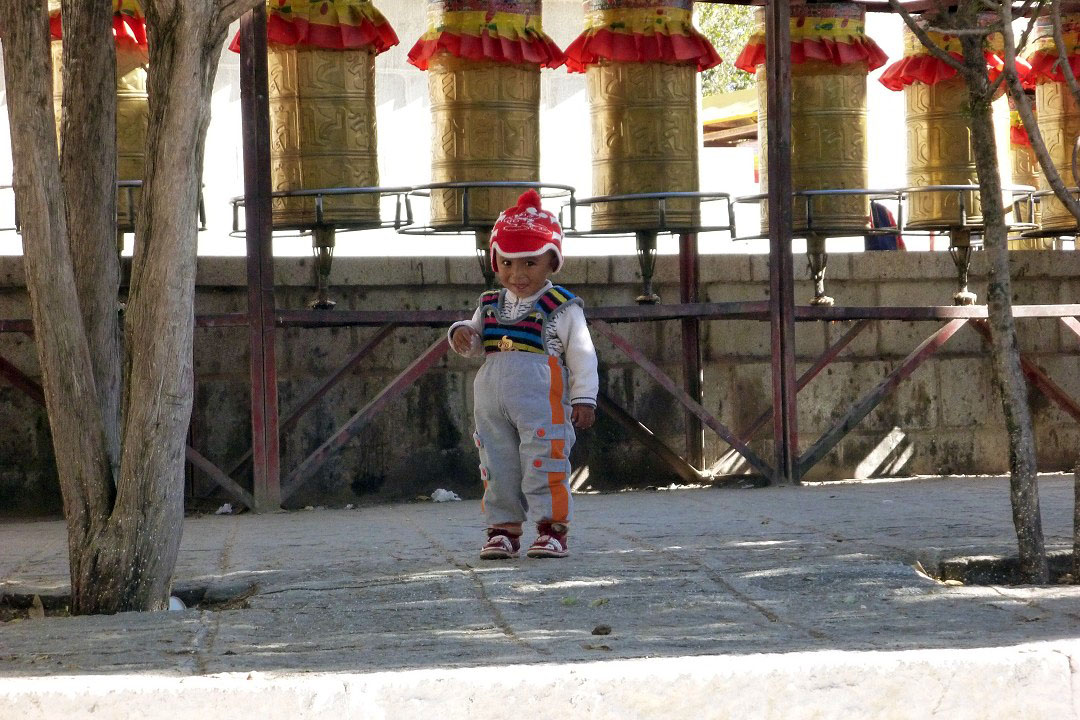
A small child in front of prayer wheels. This picture raises a few questions for me. Many tourists and people from far away simply find the intense Tibetan faith fascinating. No question, it really is. I have seen countless believers and families who devote their whole lives to their faith. Over and over like a prayer wheel, as if in a trance, they repeat their rituals for hours, days, months and sometimes even years. To ask the critical question: Is such intense faith good for the individual? Does a child even have the option of questioning things? I don’t want to start a debate here, but the impressions of this deep faith were so overwhelming for me that I automatically find myself questioning these things. The only thing I’m sure of is that interfering with this impressive culture would be wrong, because the religion practiced here is, fortunately, peaceful and admirable in every respect, has developed over thousands of years and gives people something to hold on to in this rather hostile environment (climate, vegetation).
From a different angle, you could also ask why in our Western society it’s normal to worship the computer for sometimes more than ten hours a day (or spend that time in the lab, as the case may be) in the hope of making your wishes come true via a few intermediate steps. Seen from a distance, there are clear parallels here, just in a different set-up - so in that sense, another intense faith. ;) It comes down to what you yourself prefer in order to be happy with yourself and your life in the end. That in turn depends on the culture around you, your individual background and, of course, your own world view. And in the end, all of this leads to the incredible variety of different faiths. … Oh my, how philosophical. As for me personally, I’ve found that I prefer the Western way. Pensively yours, Mathias
2 comments
From the time of the trip (2010–2017). New comments are not possible.