Bhutan (Traditions, Monastery Fortresses and a Look Behind the Scenes)
November 20, 2010
After a nice breakfast and a short drive to our destination, the Bhutan discovery tour continued. As a biologist with a keen interest, I’ve come across a fair bit of biodiversity, but what crossed my path in the Motithang Preserve was something genuinely new to me.
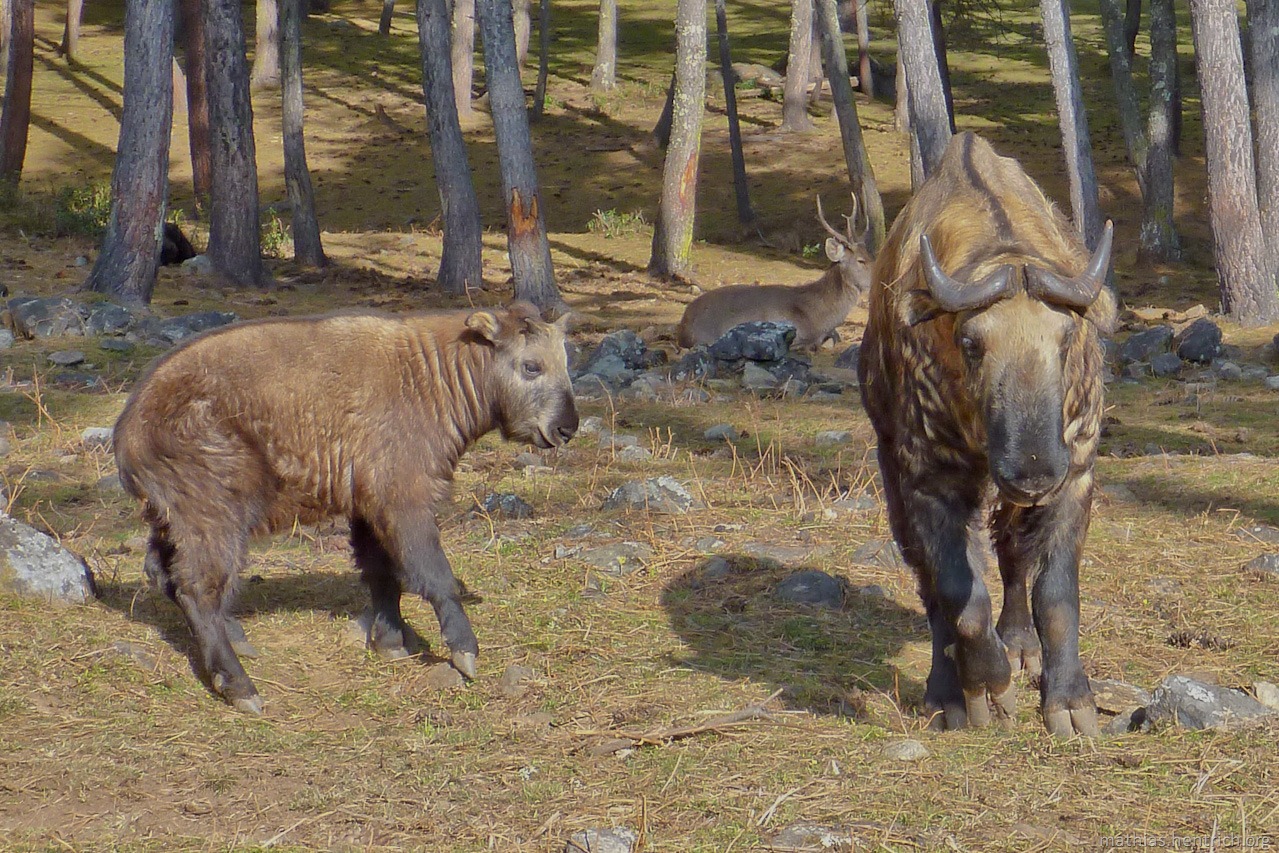
Bhutan’s national animal, the Takin. The creation of this intriguingly clumsy-looking creature goes back to the legendary saint Drukpa Kuenlay (around 1500), who is very famous in Bhutan. Believers came to him wanting to see a miracle. Hungry as Drukpa sometimes was, he asked for a goat and a cow. After the meal, all that was left were the bones (he burned a lot of calories, as we’ll find out later). Ever the clever one, he then took the goat’s skull, put it on the cow’s bones and brought the creature to life. The miracle had happened, and the Takin was born.
Because it’s so unique and not closely related to any other animal, taxonomists later gave the Takin a genus of its own (Budorcas). And for a few years now, genetic analyses have also shown that the Takin is related neither to the goat nor to the cow, but rather to the sheep. What a wizard that Drukpa was.
But Drukpa Kuenlay, aka “The Saint of 5000 Women”, aka “The Divine Madman” (or the Holy Fool), the one who burned all those calories (“I can have sex with many women, because I help them to go the path of enlightenment.”), is actually way cooler than that. He came up with some interesting teachings that are well worth reading and really make you think: Essence of the teachings of Drukpa Kuenlay. ;)
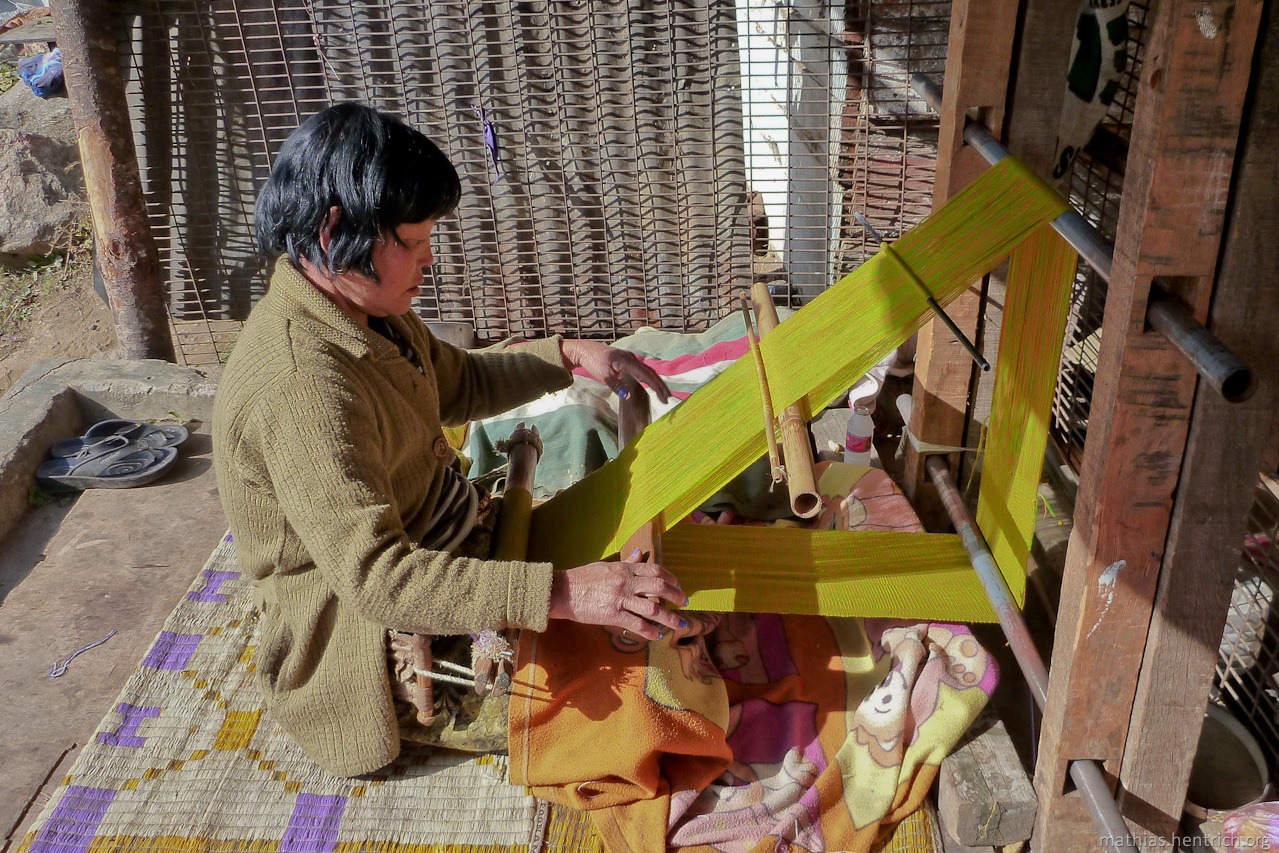
Right next to the preserve I bought a few genuine handmade scarves as souvenirs/gifts, and off we went…
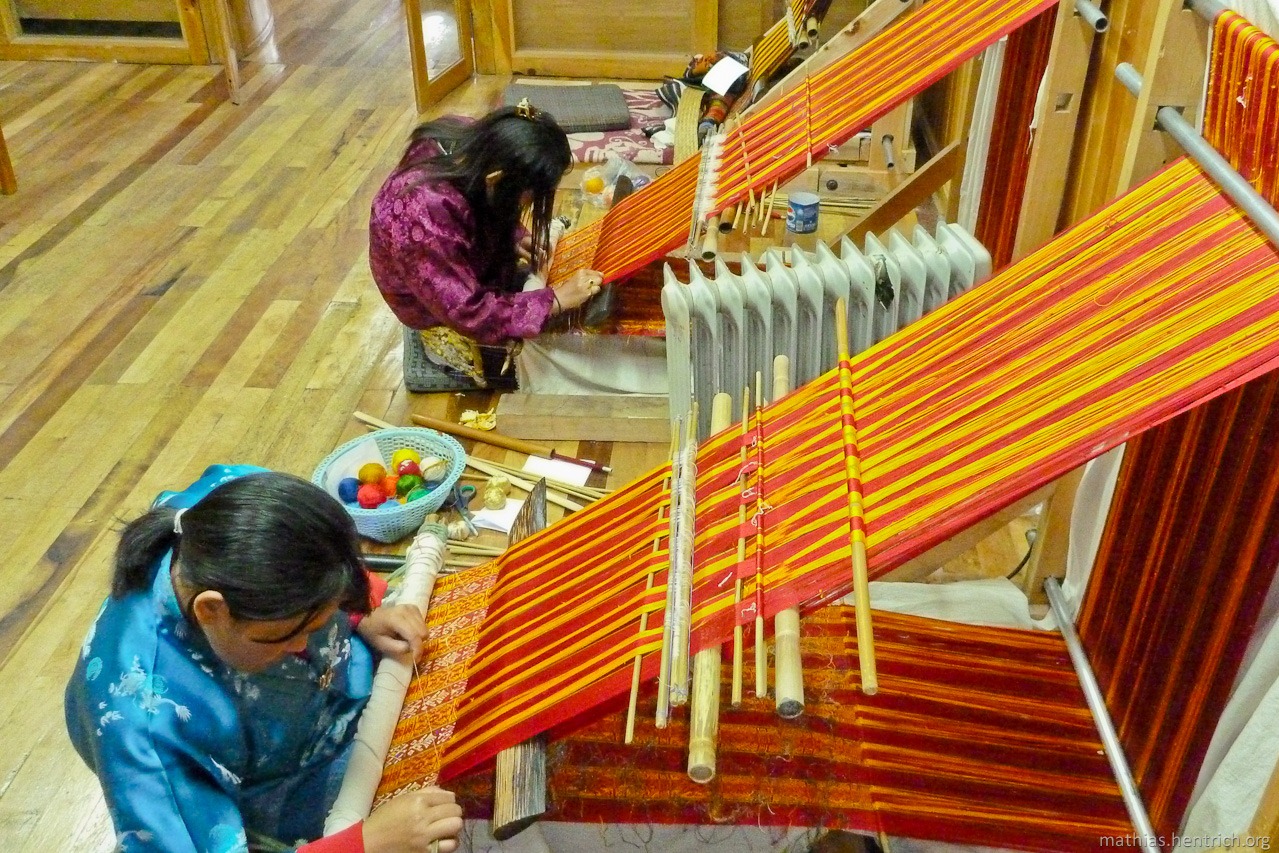
…to the royal Bhutan Textile Museum, where besides all sorts of traditional styles of dress, you could also watch fine robes being made in the back room. Making a really stunning outfit can take anywhere from several weeks to months.
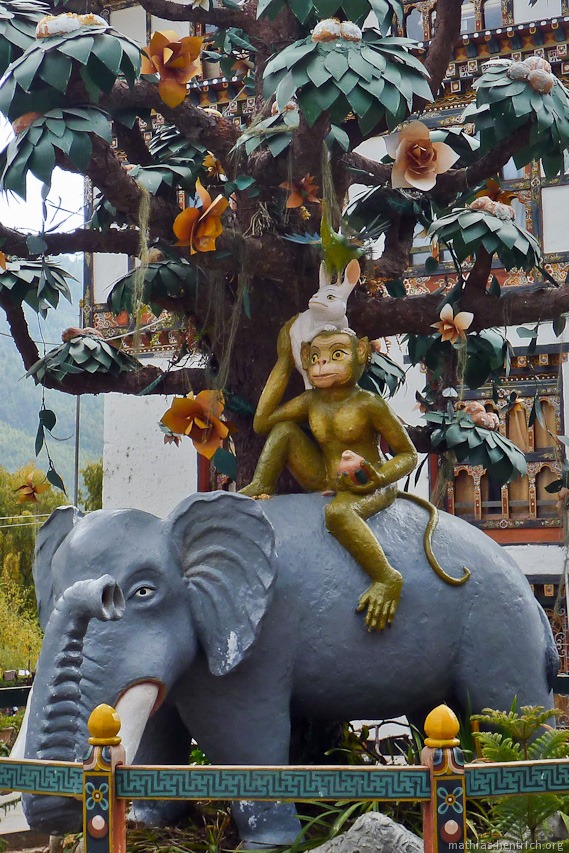
On the way to the next stop I made a really interesting discovery: a statue of an elephant, monkey, rabbit and partridge under a peach tree. So, what do these animals, stacked on top of each other in order of size, remind you of??? Exactly, the Town Musicians of Bremen, just with a different line-up. Whether the Brothers Grimm took their inspiration from the Buddhists of Asia will probably remain a mystery. One thing’s for sure: the story is a bit different. The four friends above come from a Tibetan fable more than 600 years old about age, friendship and living together in peace. The story is anything but rare here – later on I often came across similar pictures of the four friends on monastery and temple walls.
After a visit to the Folk Heritage Museum in Kawajangsa, where – for questionable reasons – photos weren’t allowed, we stopped, at my request, at a…
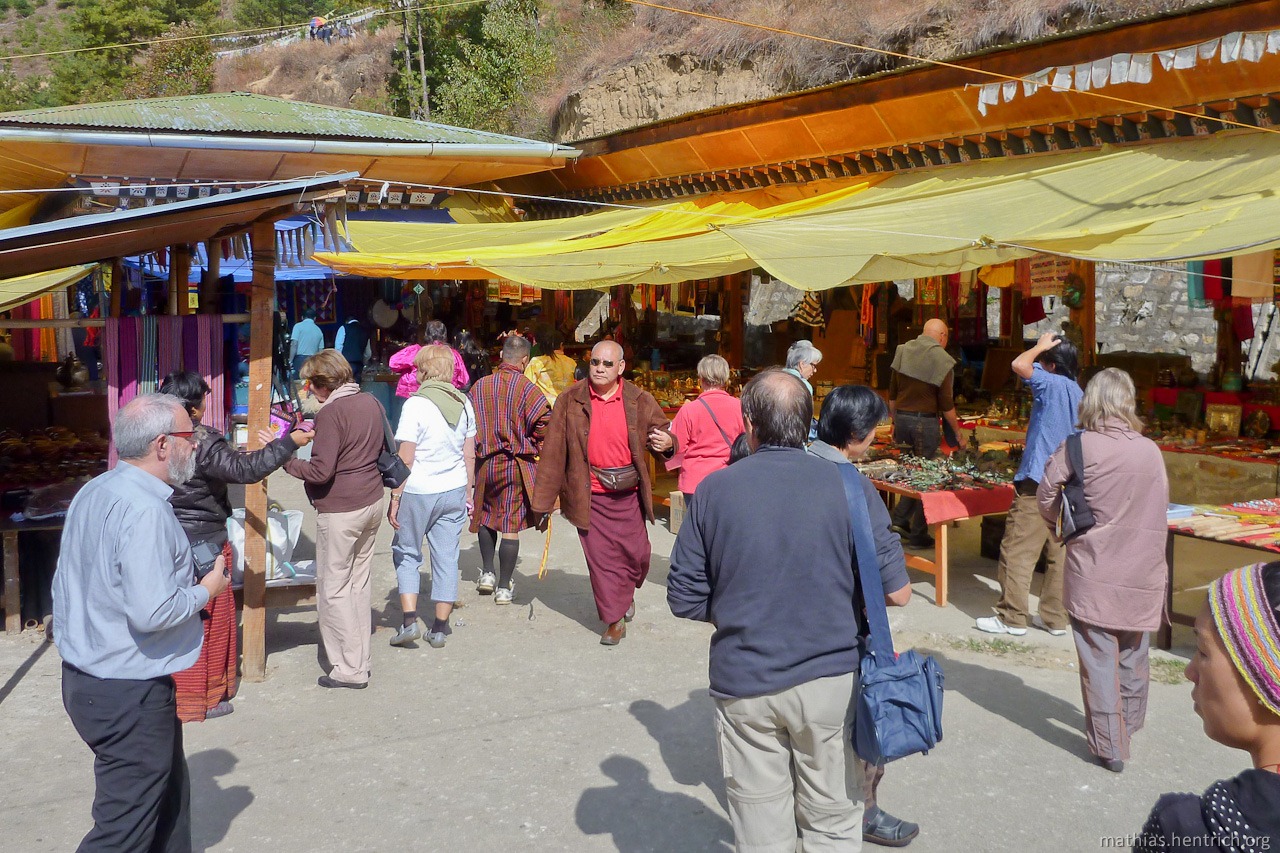
…souvenir market in Thimphu with all sorts of overpriced knick-knacks. Sadly, I didn’t find anything here.
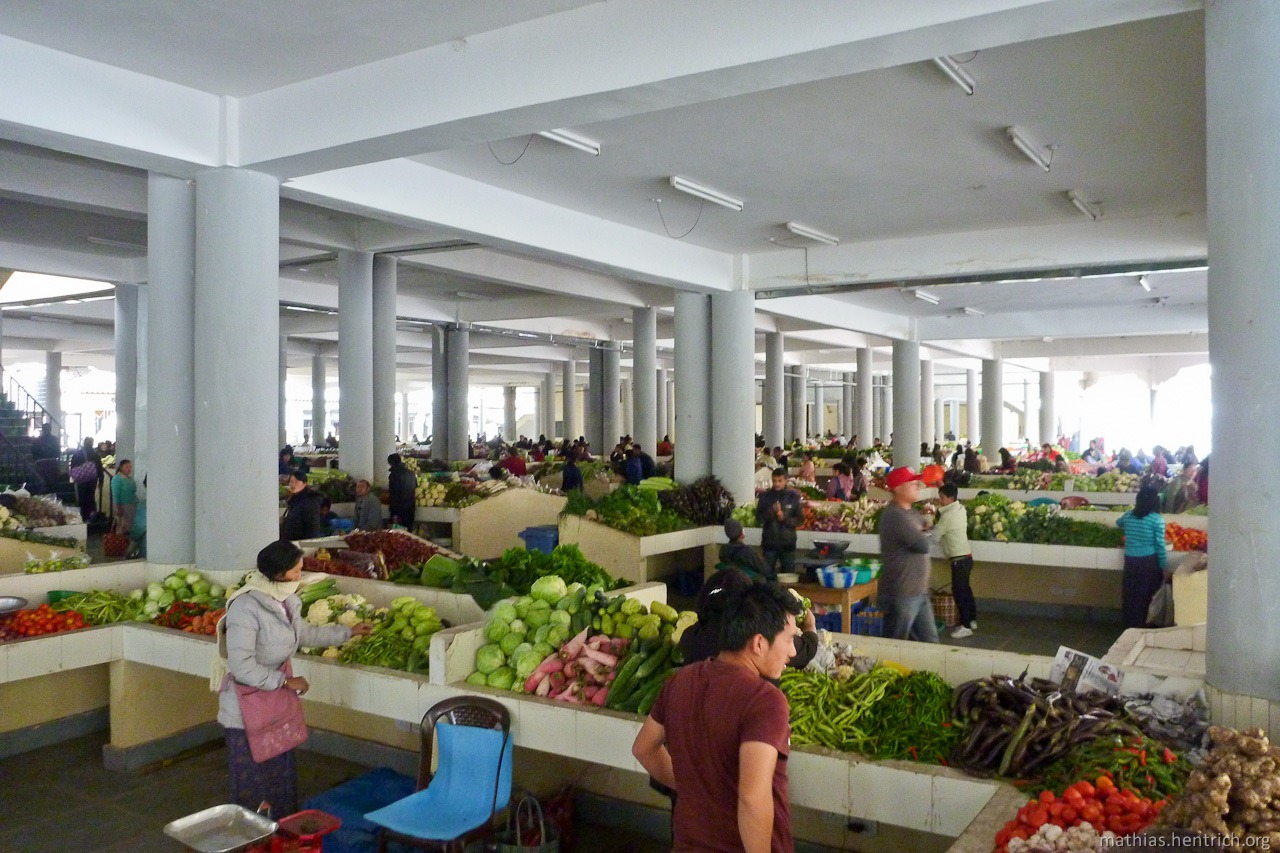
After a quick detour through the local market, which was pretty big, we drove on towards the next town.
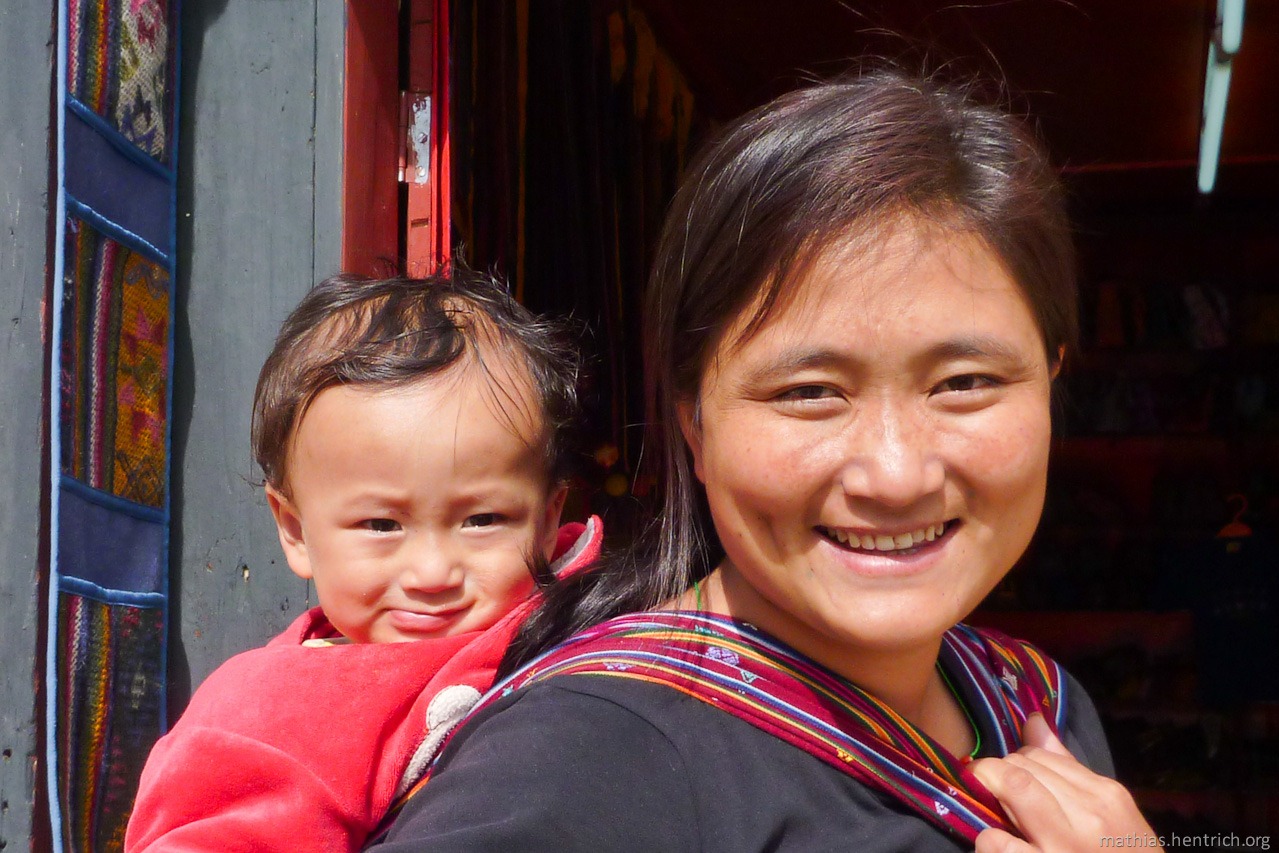
The locals‘ usual expression: the moment they see a stranger, a big, warm smile follows, almost automatically. :)
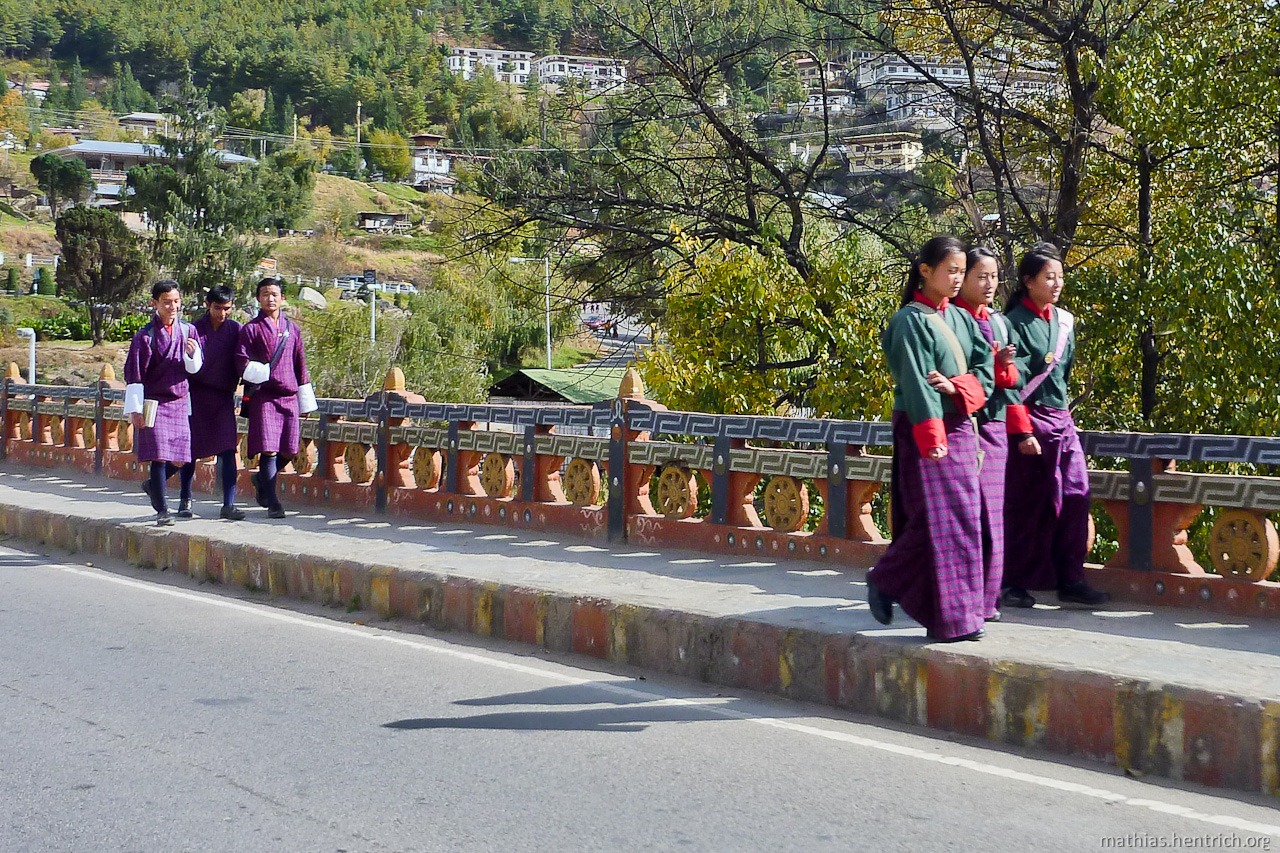
In the photo you can see the school uniforms for girls (right) and boys (left).
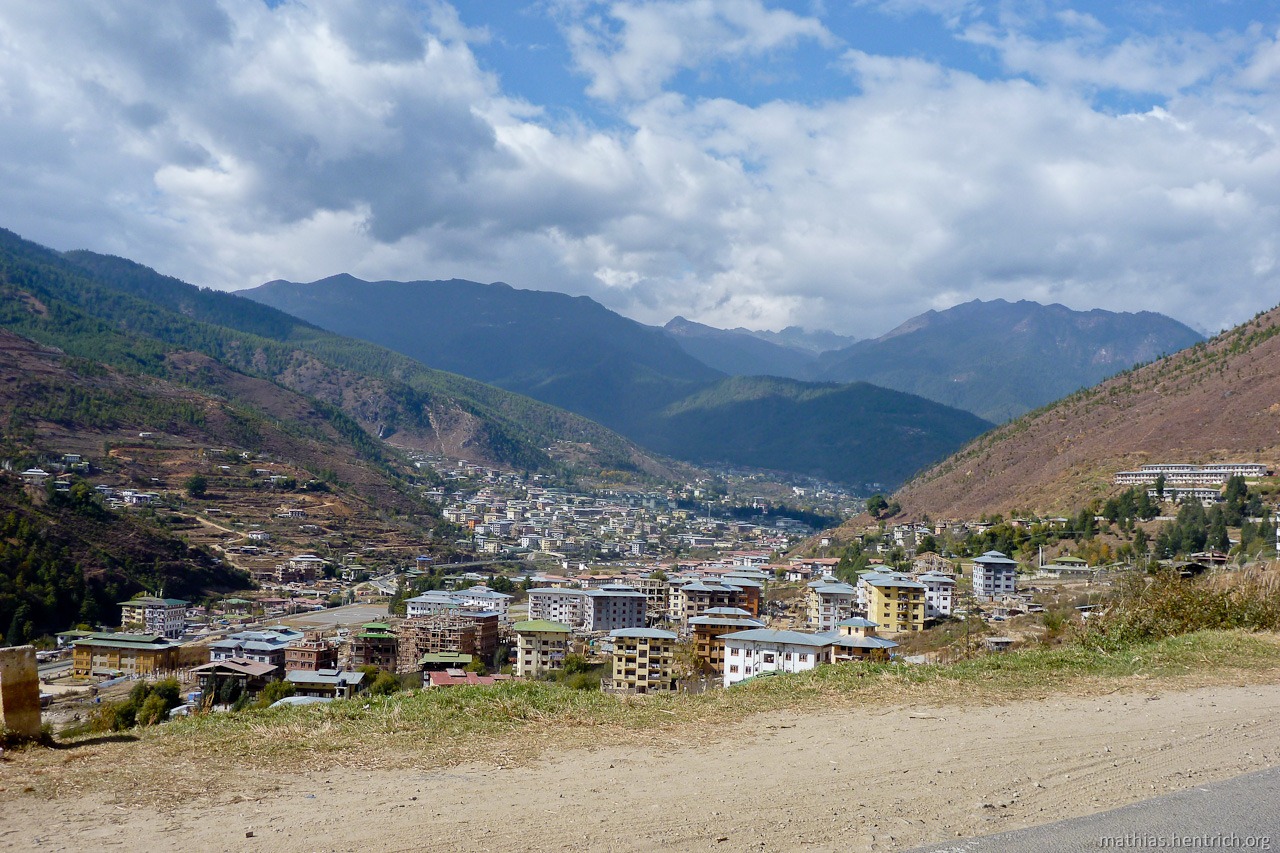
During the drive I admired the view over Thimphu by day,…
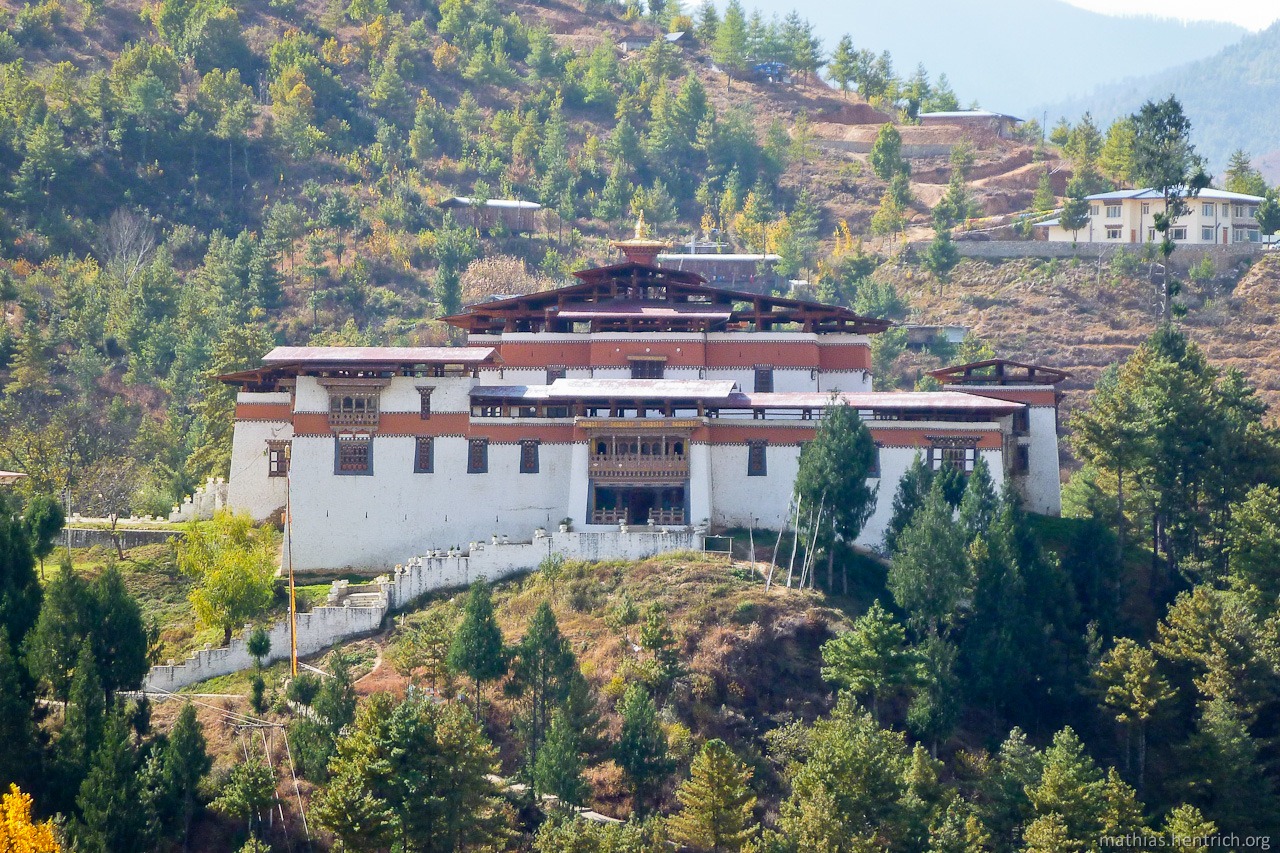
…the oldest fortress in Bhutan in the distance (Simtokha Dzong),…
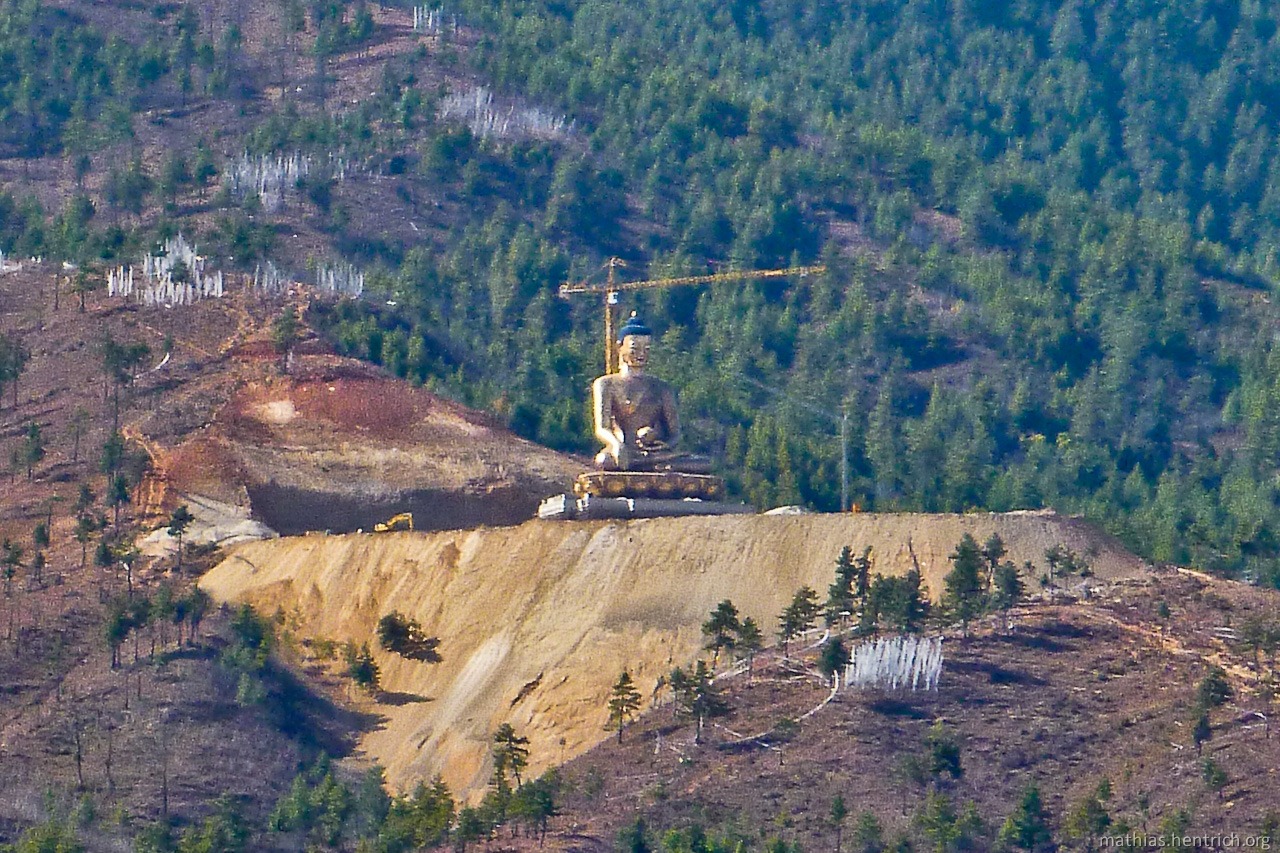
…the huge Buddha Dordenma statue,…
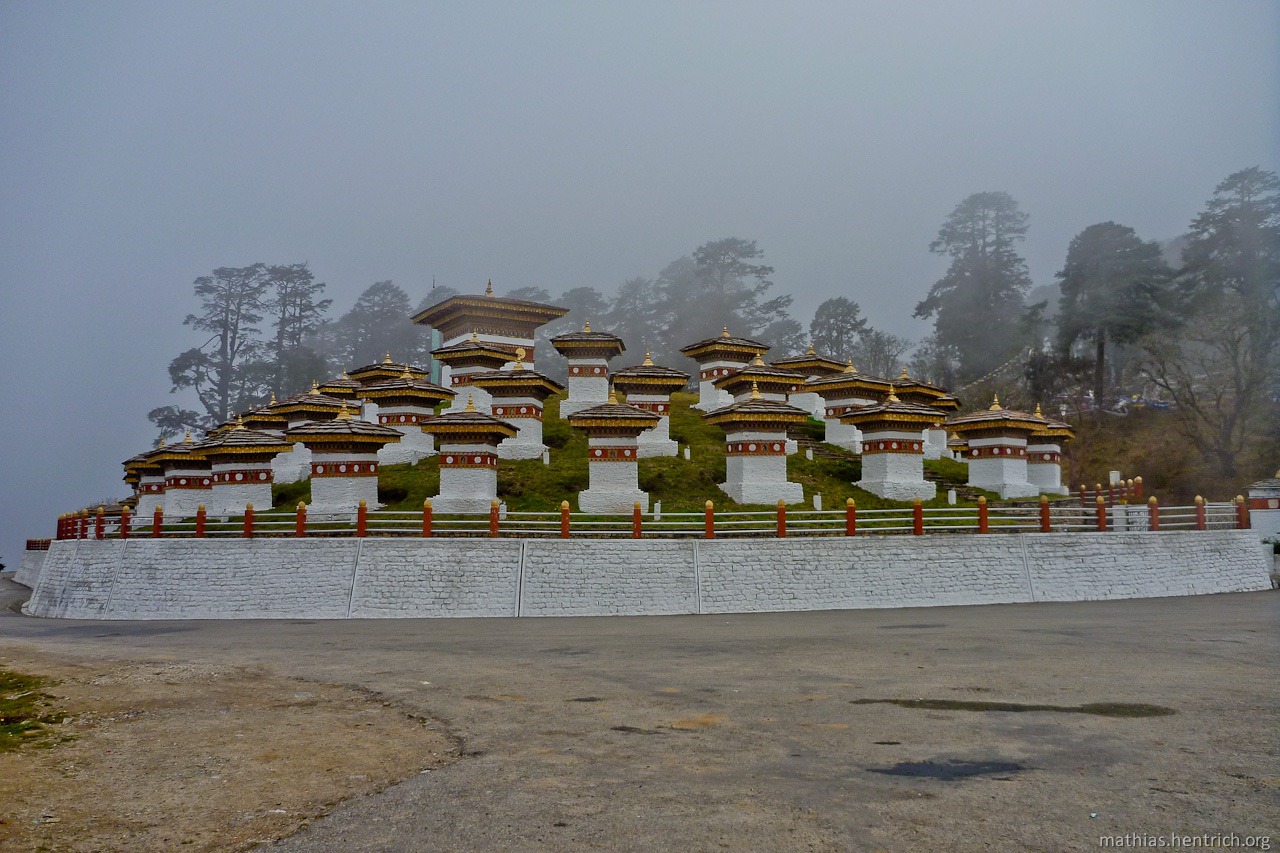
…and the 108 stupas on Dochula Pass…
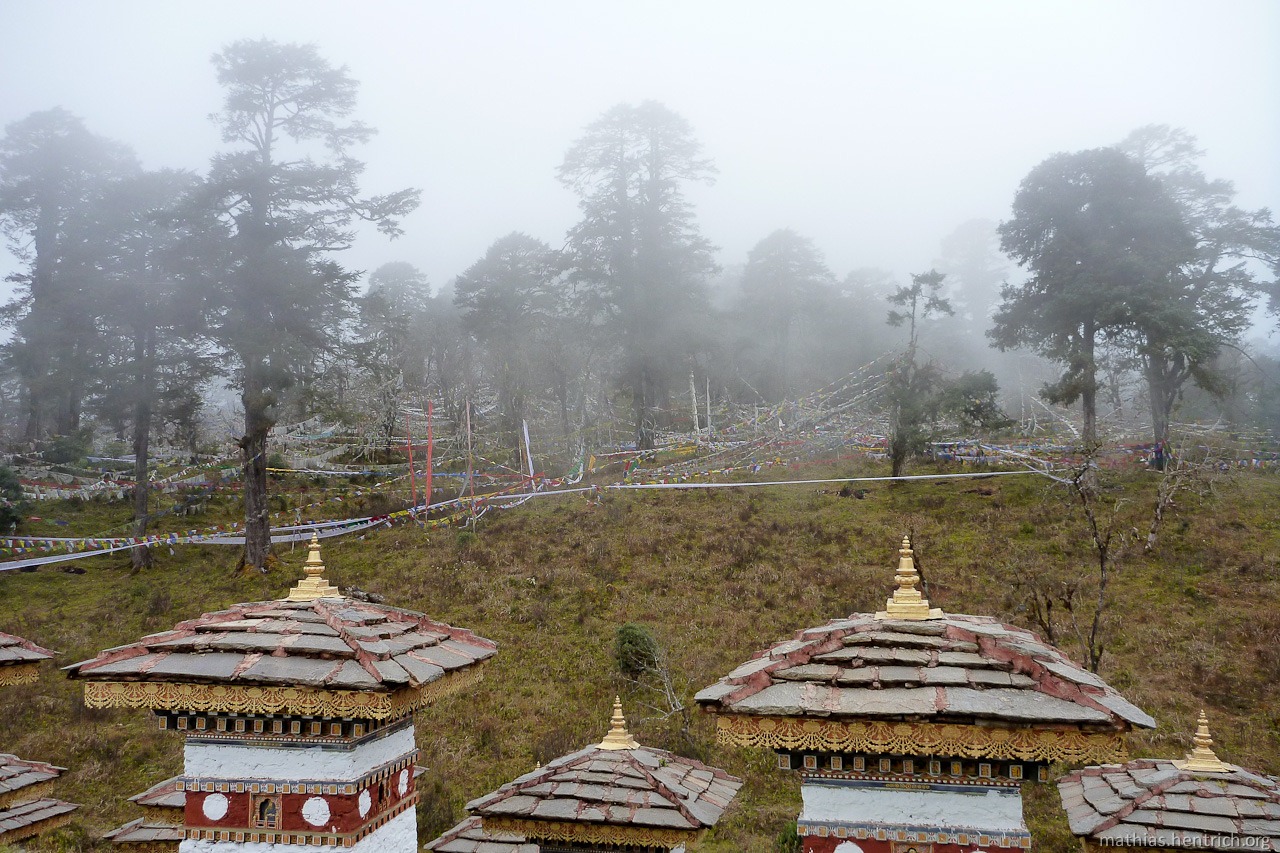
…with the eerie-looking forest next to them, shrouded in fog.
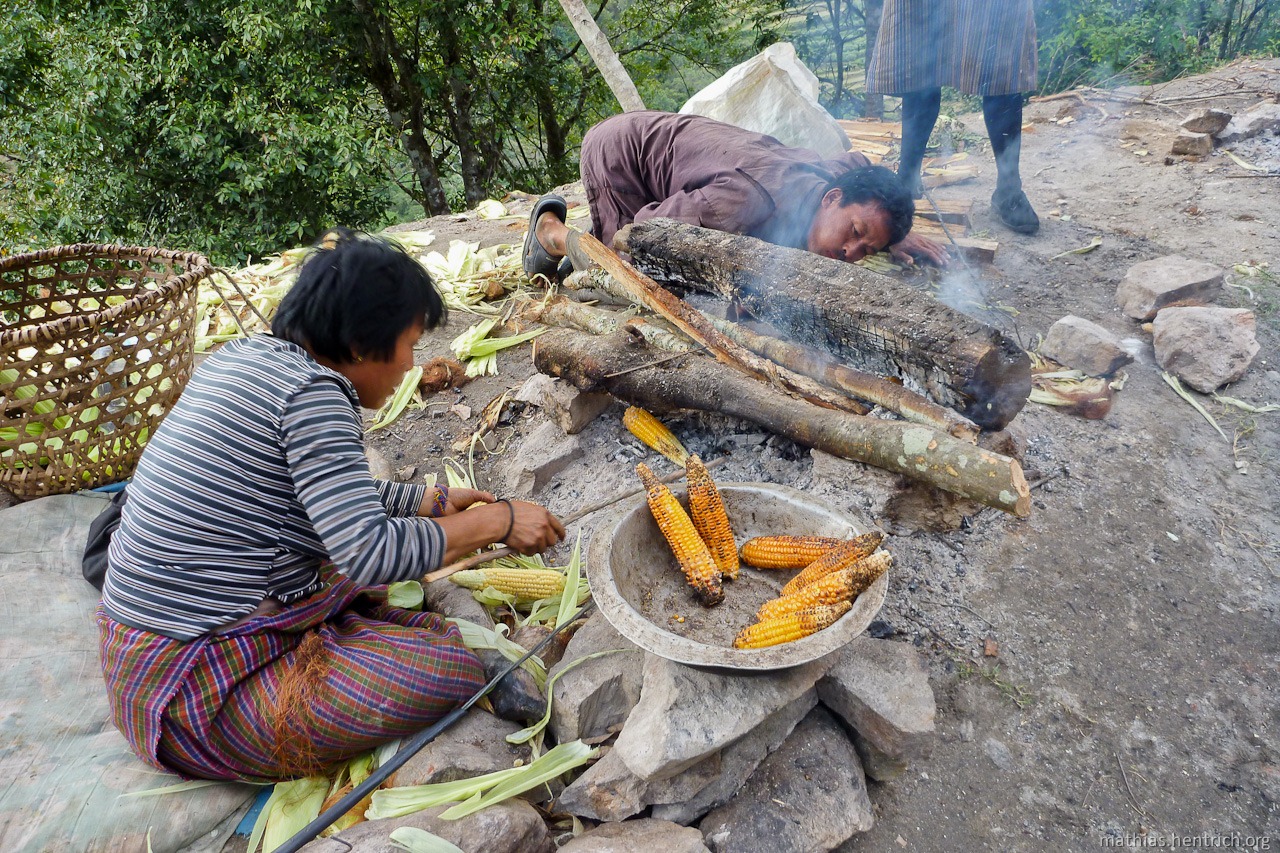
After a tasty roasted-corn snack by the roadside, we were off again…
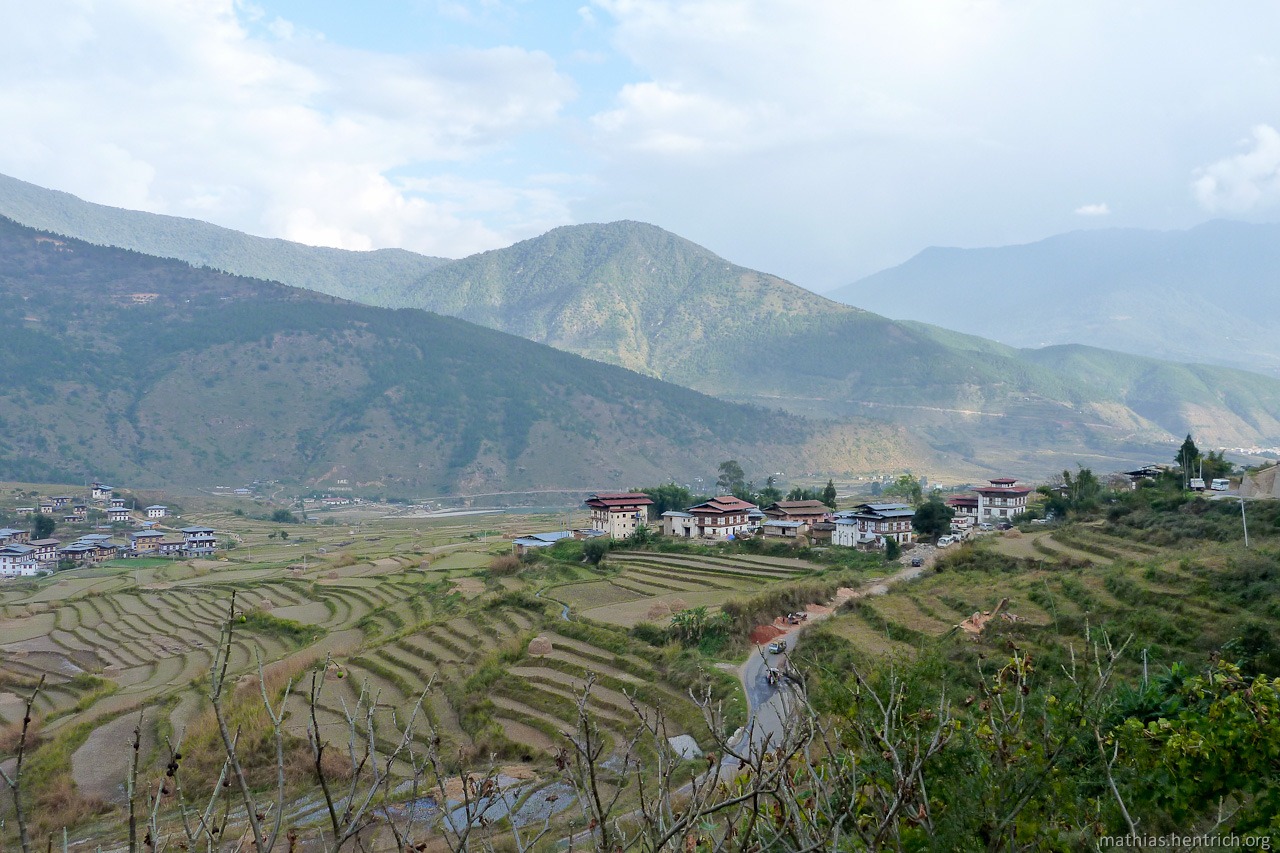
…through breathtaking scenery to the town of Punakha…
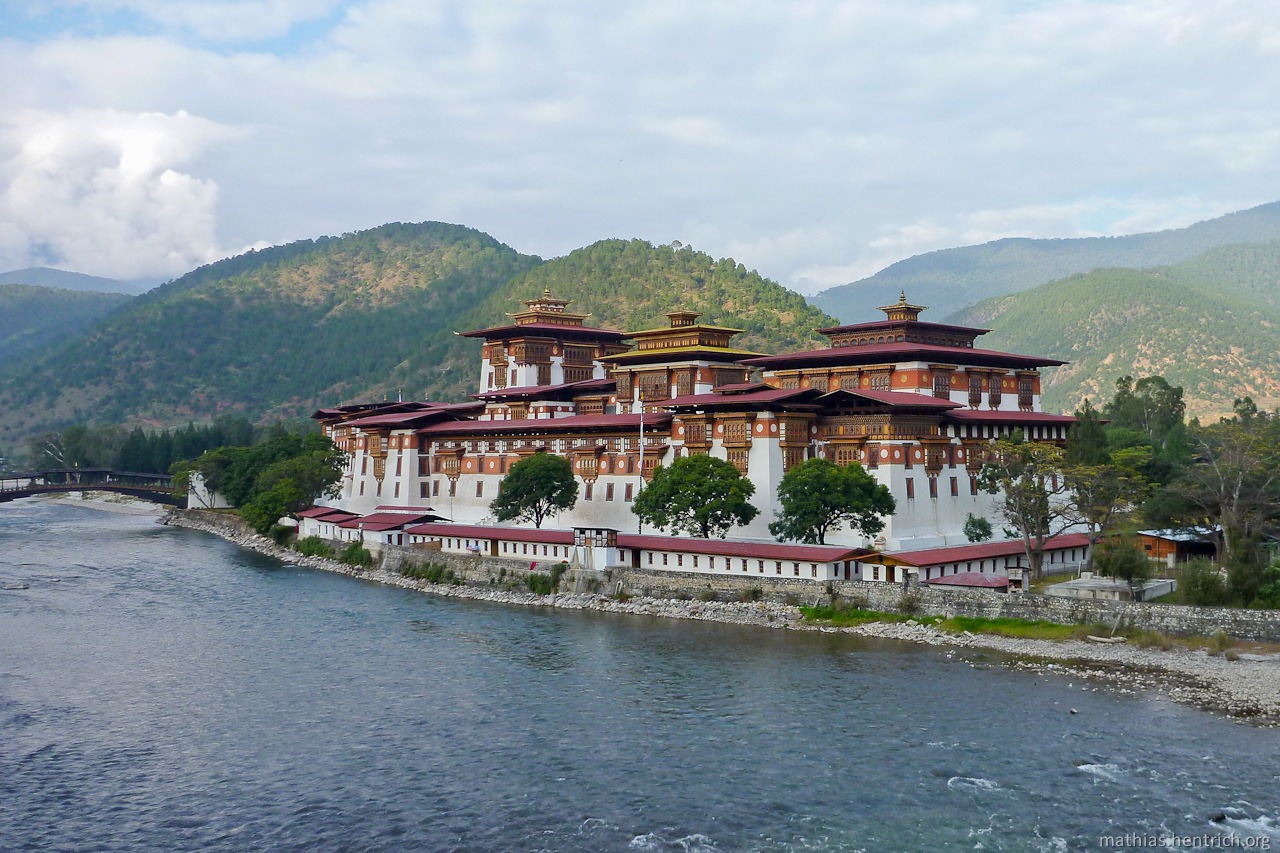
…and its landmark, Punakha Dzong.
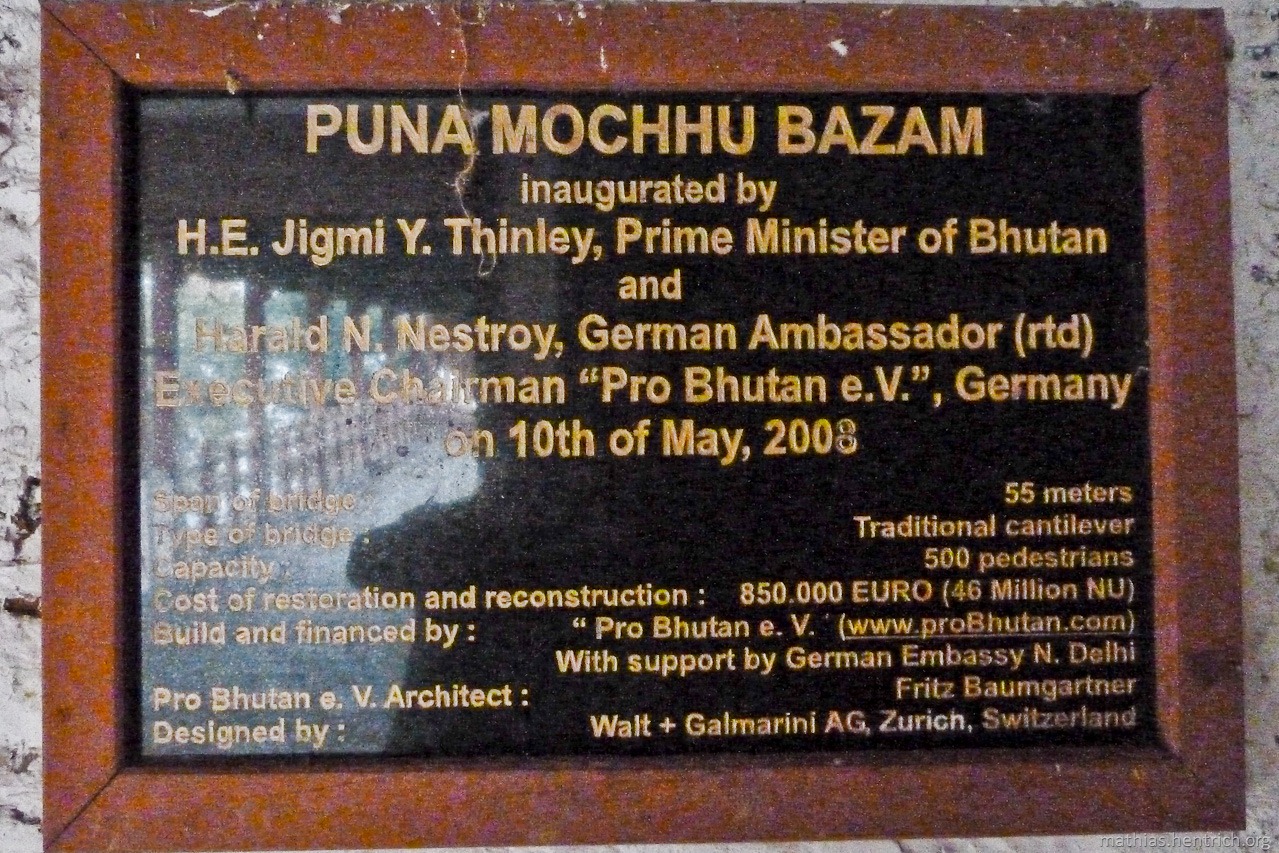
To my surprise, I discovered that the bridge to the monastery fortress had been renovated a few years earlier with support from a German association (http://www.probhutan.com/). Bravo! :)
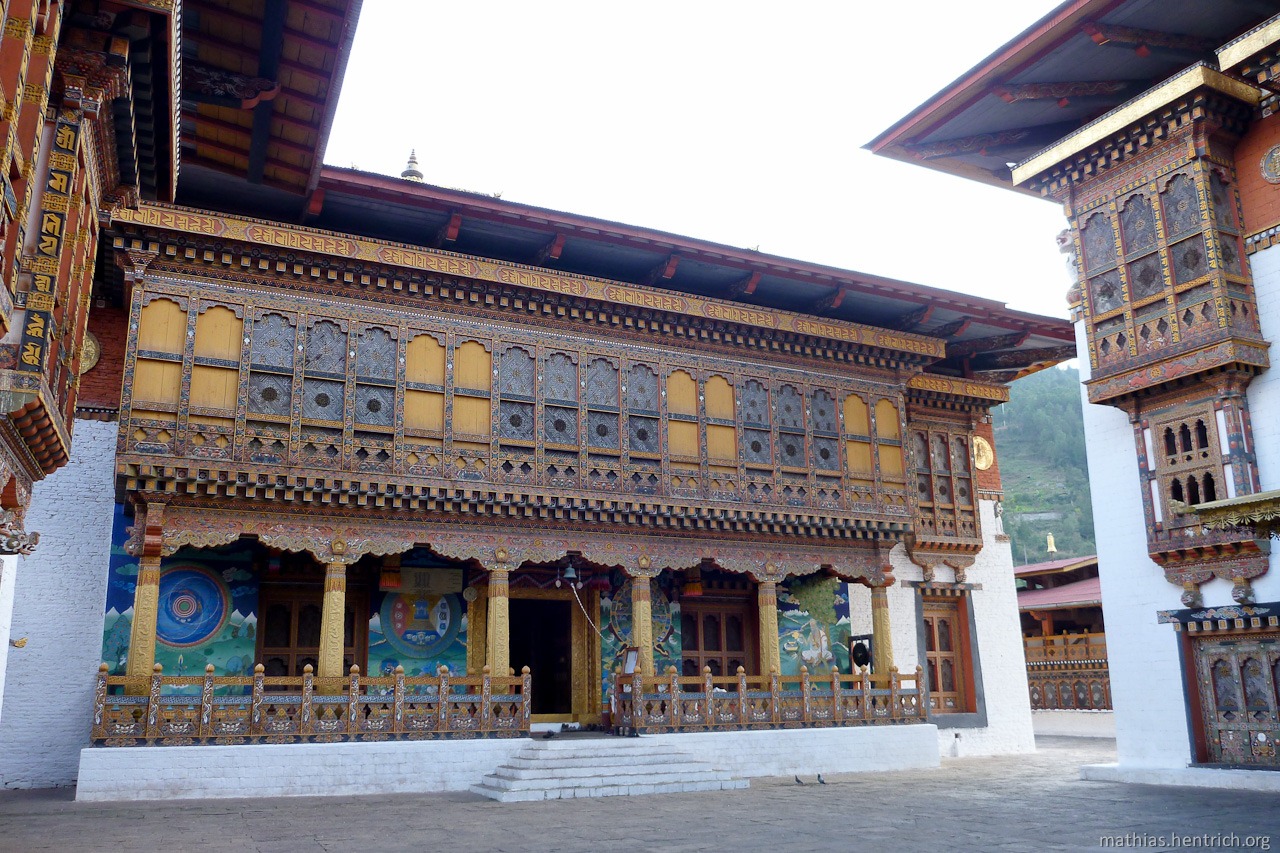
Inside Bhutan’s second-largest fortress we found elaborately decorated and…
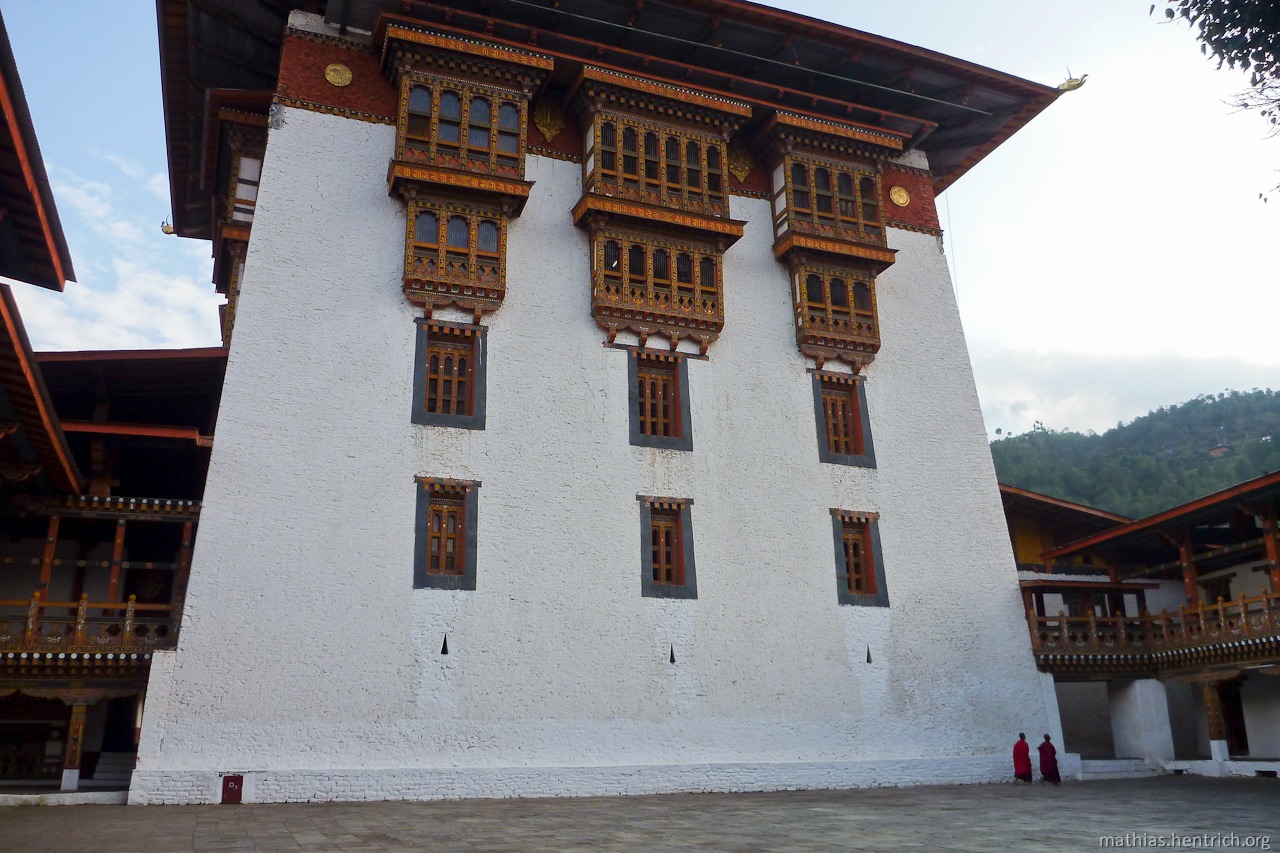
…absolutely enormous buildings. For scale, you can make out two monks at the bottom right of the photo above.
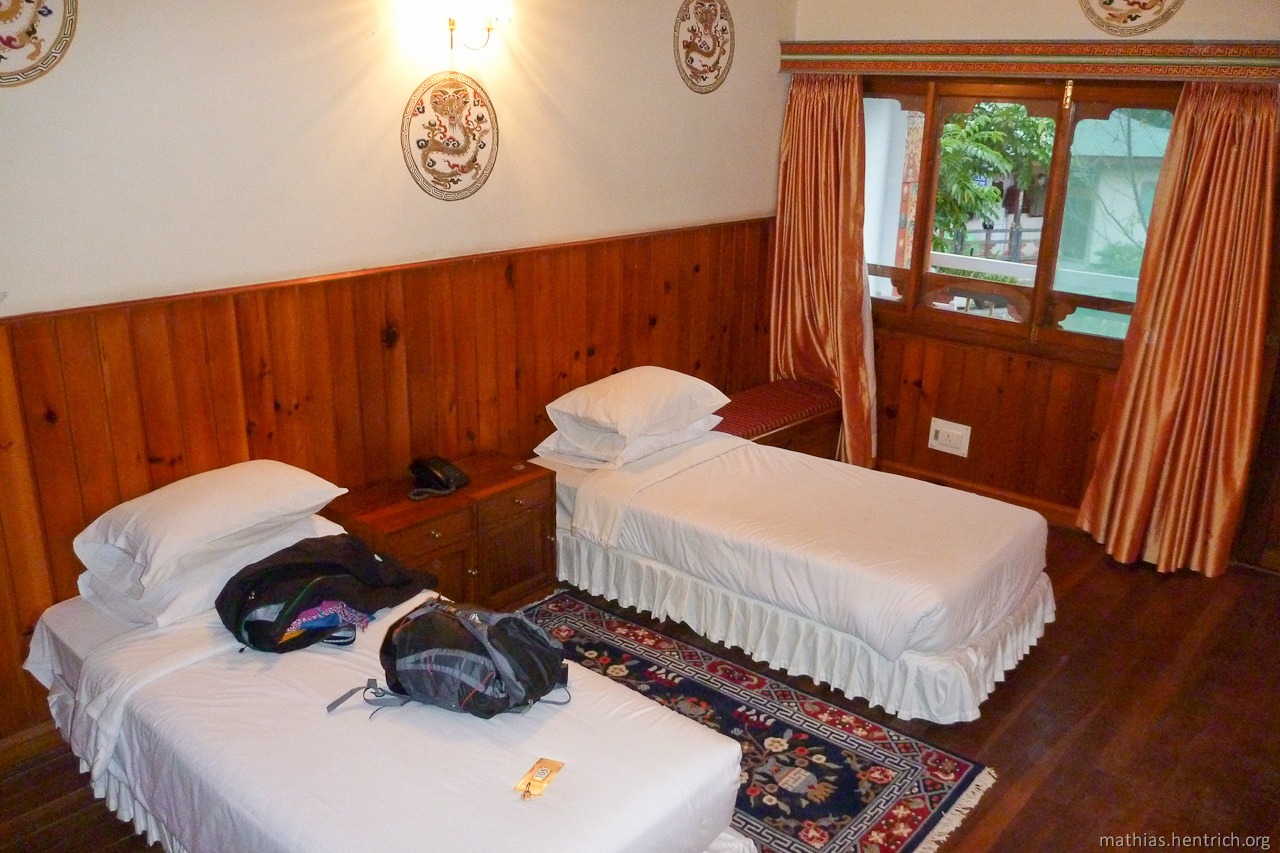
After all those impressions, I once again marvelled at my room…
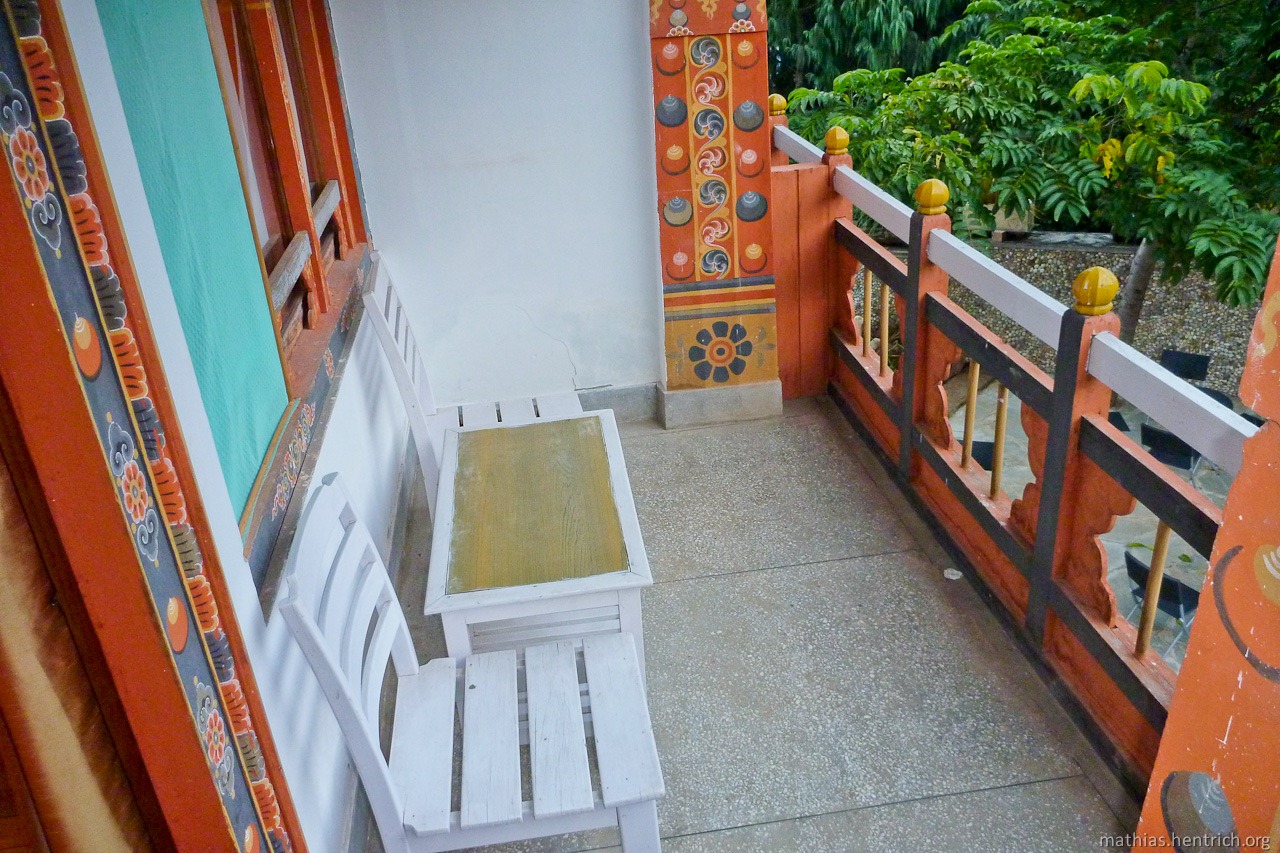
…with its own balcony, and, as usual, enjoyed a lavish dinner. But the day was far from over! Seeing the tourist attractions is all well and good – especially in Bhutan – but the main focus of my trip is the local people and their real culture, how they see things and how they think: a look behind the scenes, so to speak. I asked my guide whether it would be possible to meet locals in private, not while they were working. A smile spread across his face. No problem, he said – tonight we’re going to the disco! :D
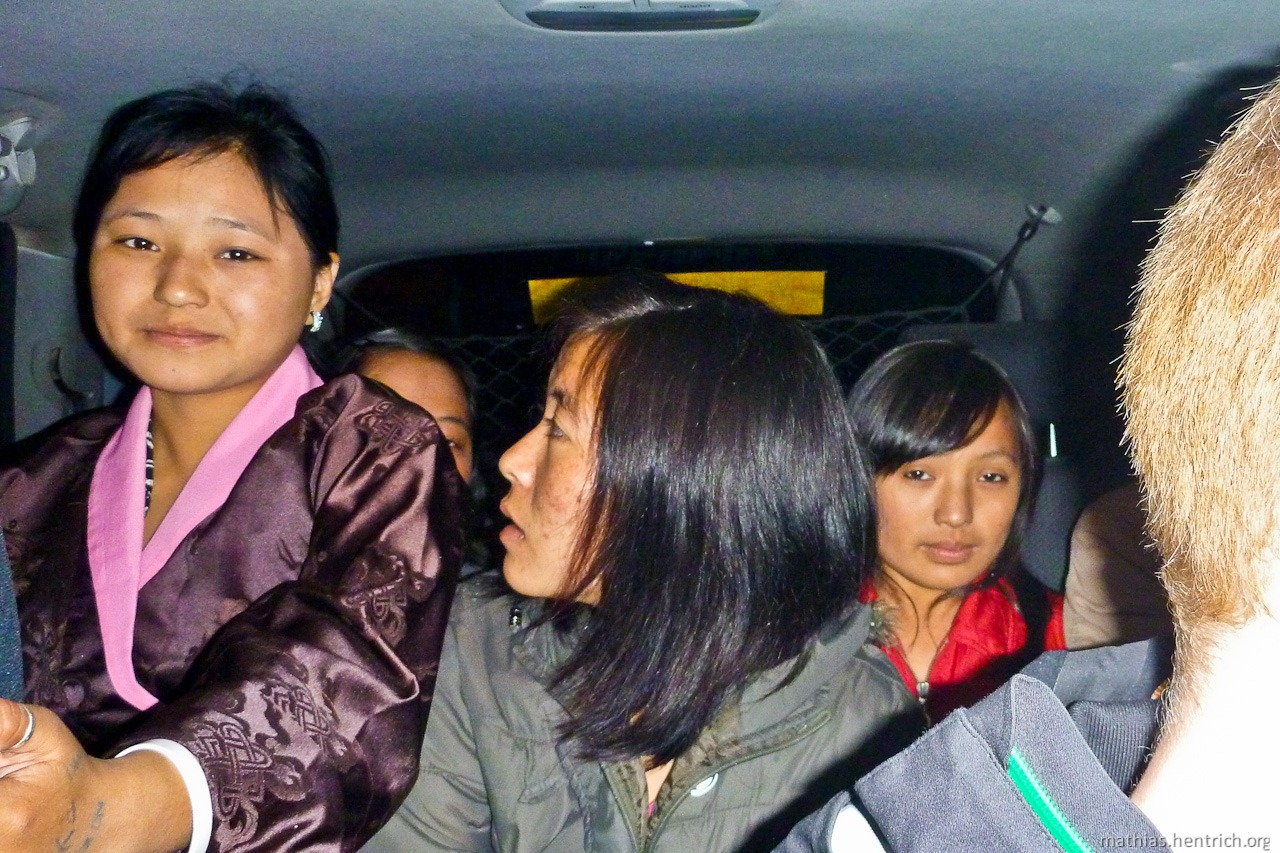
Word of my unusual request quickly got around the hotel, and before I knew it our car was packed with hotel staff who were dying to come along. Sure, we only had a five-seater – but if you don’t mind getting a bit cosy, ten people fit in, no problem…
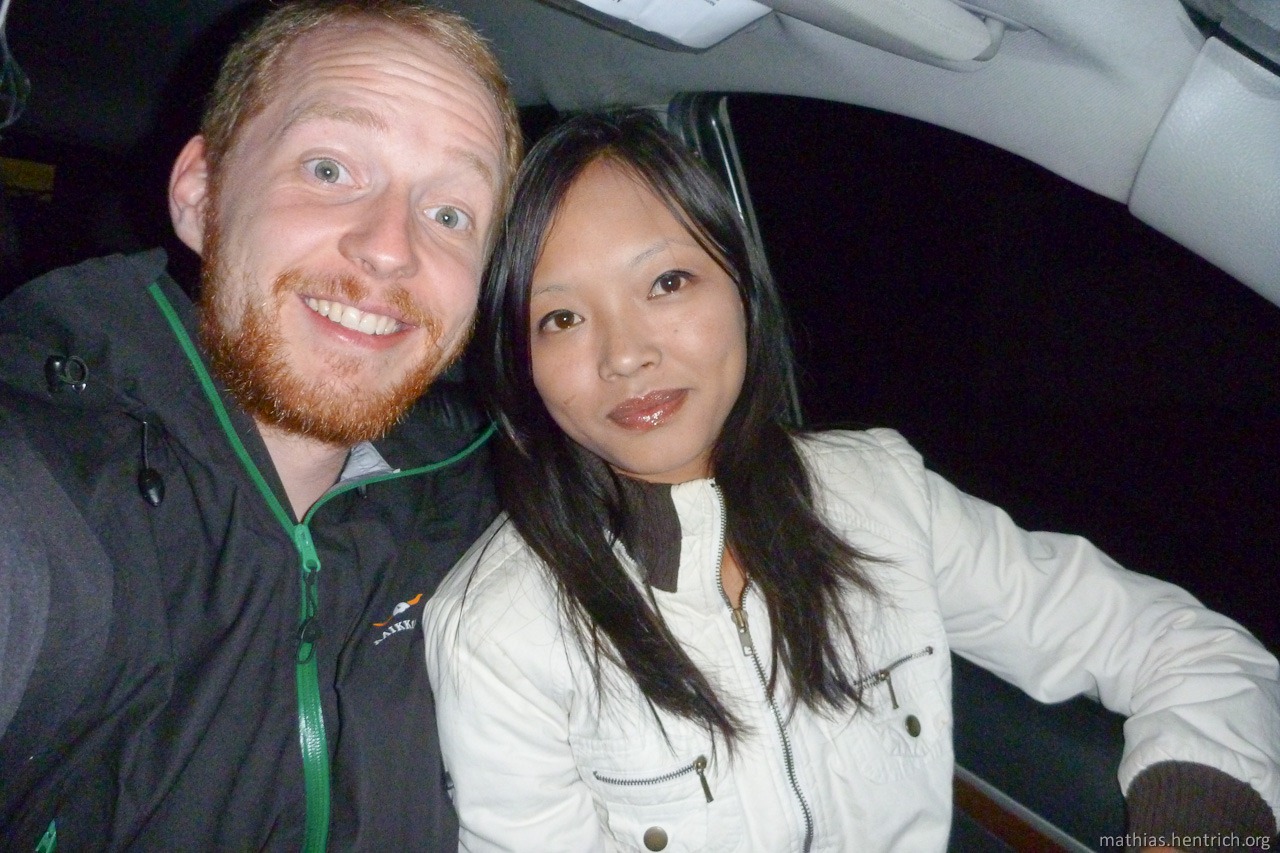
I was a little surprised, though, that the seat on the front passenger’s lap in particular was taken for granted – and much sought-after, too. Oh well, I’m a friendly guy. ;)
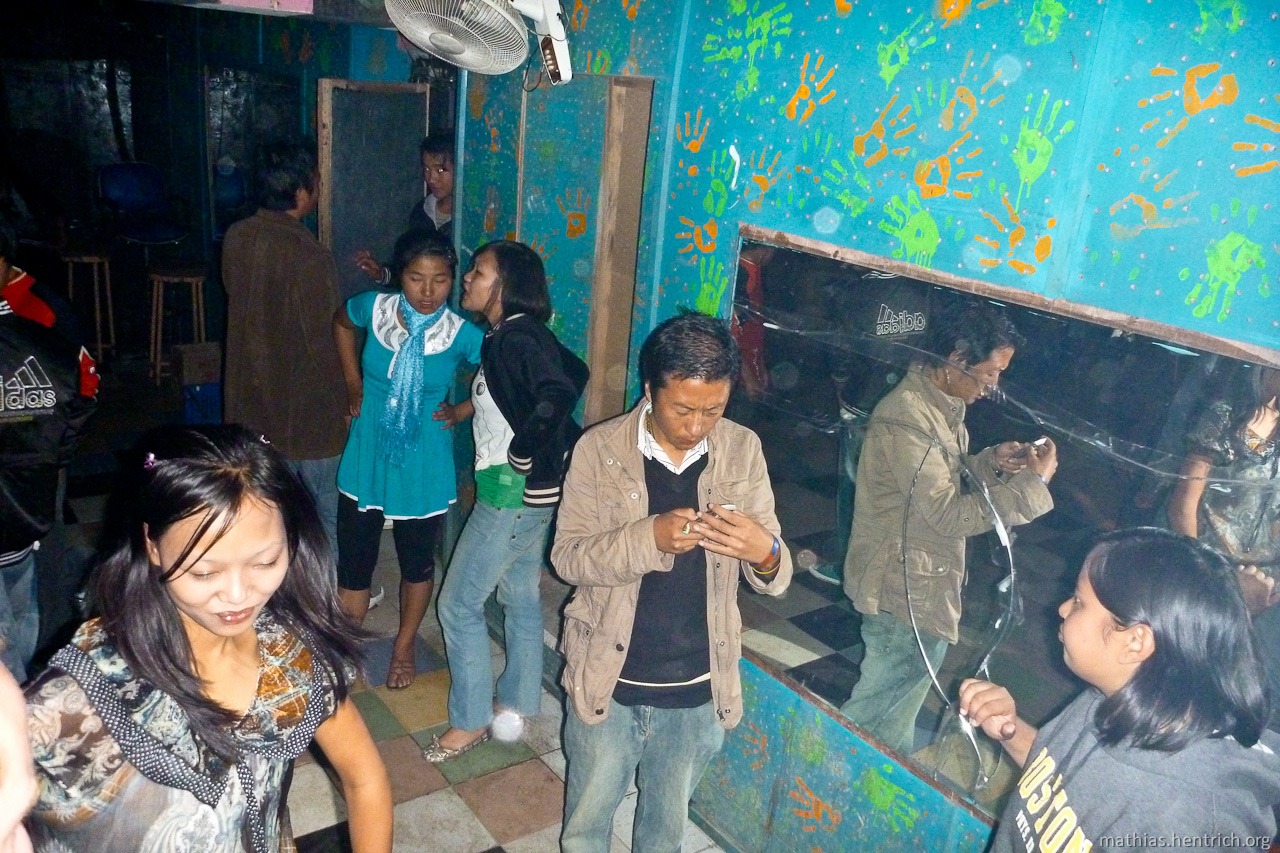
We finally got to the club and, along with a few others, were among the first to arrive. That’s my guide in the middle of the photo above, in ordinary clothes – he was off duty now – just like everyone else. Their style of dress wasn’t much different from the Western world – at any rate, there was no trace of anything traditional here. An hour or so later the place was going wild to all sorts of music (mainly Western with Indian influences). Unsurprisingly, I was quite the attraction for the clubbers. Lots of people said I was the first tourist ever in this club, even though it had been around for several years.
Almost without exception, the first two questions that countless people asked me were: 1. Where are you from? 2. Are you married? My first answer, “Germany”, earned an approving “Ahhh”, and my second answer, “No”, a very distinct “Ohhh”. What happened next was hilarious: if it was girls asking, then after my second answer they’d snuggle up noticeably closer, as if by magic, and turn on the sweet looks – or else grab me (literally) to dance with them. The guys, on the other hand, would immediately steer their sisters or female friends my way and watch, beaming, as they danced up to me… Several highly entertaining hours later, we finally drove back to the hotel as dawn was breaking. What a night! Bhutan guards its traditions very closely, and they’re well worth seeing – but here, too, live perfectly normal people like you and me, with all kinds of wishes and needs. Meeting ordinary locals was definitely one of my best experiences in Bhutan, and a special one both for me and, I’m sure, for the Bhutanese too. :)
Further reading:
- Motithang Preserve – Preserve protecting the Takin, near Thimphu
- Takin – Bhutan’s national animal
- Drukpa Kuenlay – A truly enlightened one
- Taxonomists – Working towards a uniform classification
- Budorcas – A genus of its own for a puzzling creature
- Essence of the teachings of Drukpa Kuenlay – Short, sharp and to the point
- Bhutan Textile Museum – Traces how dress has evolved in the kingdom
- Elephant, monkey, rabbit and partridge – Four friends in a Tibetan fable
- Town Musicians of Bremen – Well-known German fable
- Brothers Grimm – Co-founders of German studies
- Folk Heritage Museum in Kawajangsa – Shows the traditional way of life
- Simtokha Dzong – Oldest monastery fortress in Bhutan
- Buddha Dordenma – Newly built, one of the largest Buddha statues
- Stupa – Buddhist monument
- Dochula Pass – Altitude 3,115 m; surely a great view in clear weather
- Punakha – A tiny town with a big sight
- Punakha Dzong – Palace of Great Happiness, Bhutan’s second-oldest monastery fortress
- Disco – Club; meeting place for physical exercise to the beat of the music